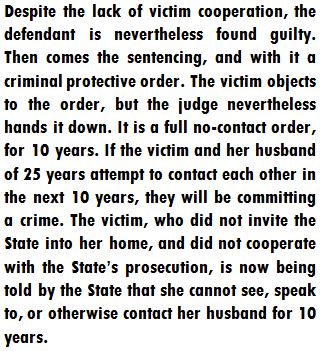
If Restraining Orders CAN Be Abused, then the PROCESS Is Abusive—and Should Be Repealed

This post addresses a block its writer has noted even in the commentaries of those profoundly injured by unjust or false accusations. That block typically runs something like this: “I’m totally for restraining orders when they protect the violently abused, but….” This perspective is blind, and this post will explain why.

“The road to hell is paved with good intentions.”

—Proverb

“You know, the very powerful and the very stupid have one thing in common: They don’t alter their views to fit the facts; they alter the facts to fit the views. Which can be uncomfortable if you happen to be one of the facts that needs altering.”

Dr. Who

I was accused of a number of unsavory things in the spring of 2006 by a disturbed and very married woman who had hung around outside of my house in the dark for a few months the previous fall. She filed multiple police reports then complained to a judge in my presence that my request for “an explanation of sorts” had caused her grave upset and interfered with her work. (Also, she was concerned she might be “attacked”…and her husband might be…and her friends might be…and her mother might be…and….)
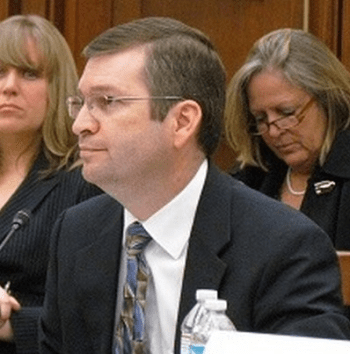
Michael Honeycutt TCEQ, Michael Honeycutt EPA, Michael Honeycutt PhD, TCEQ, EPA Science Advisory Board, Texas Commission on Environmental Quality, Environmental Protection Agency

This man, Dr. Michael Honeycutt, Ph.D., testified to the Superior Court of Arizona in 2013 (by phone) that the government department he heads (in another state) had instituted special security measures to protect a woman from me whom I hadn’t seen or contacted in seven years. When I found this self-styled damsel in distress standing outside of my residence in 2005, I was a practicing children’s humorist who fed birds and had a pup who wore a pink collar. The same woman who would accuse me of stalking and violent intentions had come to my door one night seeking a defender against men she feared were stalking her and had violent intentions. This established a relationship that included her plying me with conversation about her breasts and underwear and trying to follow me into my house after midnight (minus her wedding ring).

That was 12 years ago, and this woman has dramatically and broadly misrepresented me ever since. She’s also induced others to join her in her hoax.

I tried to find you in our system,” I was told in my initial police interview many years ago (when I still had plans and dreams of my own), “but there was nothing. At all. That’s really rare.

Over the four years I’ve maintained this blog, begun five years after my interviews with the cop, I’ve heard repeatedly from others who allege they were falsely accused and who report they had had no prior acquaintance with police precincts or courthouses, either.

Consider how this jibes with the assertion that restraining orders protect victims of violent abusers. It plainly doesn’t, and only “the very powerful and the very stupid” would say otherwise.

Public sentiment has been coerced by “the very powerful and the very stupid” to the extent that even those who know the procedure is a travesty feel compelled to allow that there are cases when restraining orders are necessary.

Changing the minds of “the very powerful and the very stupid” has to start with changing the minds of people who are neither powerful nor stupid, and who know better. There is no justification for bad law. It should be repealed.

What victims of that bad law mean when they say “there are cases when restraining orders are necessary” is that they acknowledge there are people in abusive relationships or imminent danger who need relief. They should appreciate, though, that it isn’t restraining orders that are necessary; something is. Rejecting bad law doesn’t obligate its critic to propose what that something should be. Clearly, however, what that something should be should never have innocent casualties. A law that’s supposed to protect the innocent but may destroy them is both wildly flawed and dangerous.

These are facts: Restraining orders deny defendants their constitutional right to due process; justice rendered in drive-thru procedures that may deprive defendants of employment, security, home, and family can only ever be dubious at best; and being misrepresented in a court of law, scourged by a biased judge, and gibbeted on grounds that may be trumped up or cunningly fraudulent is hurtful and possibly ruinous, and shouldn’t be possible…ever.

If you acknowledge these facts, then you must be against restraining orders, and you must be against them categorically—no ifs, ands, or buts. They’re not the answer. They were a stopgap that has become an institution. That doesn’t mean their engineering was ever sound.

Sure, it may be correct to say that you’re certain not all petitioners lie and that some desperately need protection and deserve it. It’s politically correct to say so, certainly, and it’s sympathetic to say so, too. And, sure, it may be correct to say that sometimes justice does prevail.

But if you own that rulings can be manipulated and that pitfalls are built into the process itself, then you cannot be for restraining orders under any circumstances, because the very same procedure that sometimes assuredly works good also assuredly works evil (and more easily).

Lives are at stake. A process that’s inherently corrupt is inherently wrong, regardless of whether its intentions are good and regardless of whether rulings may be righteous.

Put simply, you can’t make chicken salad out of chicken shit.

Copyright © 2018 RestrainingOrderAbuse.com
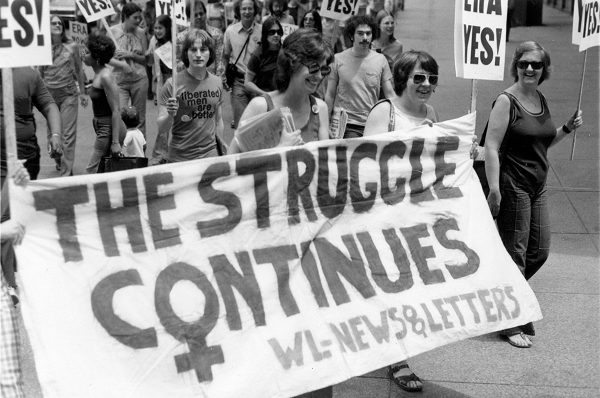
“Defend Our Constitutional Rights”: Anne’s Proposal to Redress Restraining Order Injustice

Below is a proposition by a 74-year-old California woman, Anne Copeland, who’s earning a degree in criminal justice administration. Anne alleges that accusations against her made in a restraining order petition were trumped up, and has reported being taunted and terrorized by her accusers, who were her neighbors. She also reports she’s been prohibited from performing volunteer work as a consequence of the court’s order and that it has necessitated that she pack up and move away from her accusers to gain relief from their abuse, which the order against her in essence authorized.

She urges a course of remedial action.

Some prefatory remarks from the blog’s author: Restraining orders were enacted into law pre-Internet. No one considered in the ’80s that they could be abused. No one considered that “obscure court records” would soon be talked about from one end of the planet to the other; that they could be “scanned,” “uploaded,” and conveniently distributed by “email”; or that they would be accessed by employers. No one considered that there would be “public registries” (in cases that anyone with an “Internet connection” could consult). No one imagined that the very phrase restraining order would come to be associated with the savage imagery that “the Internet” is awash with. “Restraining orders” were supposed to stop wife-batterers. Today, they may be approved to quiet any complaint, however actually innocuous the alleged behavior is. Though reported figures are few, all indications are that the vast majority of restraining order petitions are rejected right off the bat. That means even the courts regard most complaints to be stinky. So if “plenty of cases ARE actually justified,” as Anne allows below, it’s only plenty of a small fraction of those the court doesn’t already summarily toss out. Since respondents to this site like Anne are typically people who’ve had  orders sworn against them that were grounded on hyped or false accusations but even so passed muster with a judge or two, the process is pretty much just stinky.


Hi, my name is Anne Copeland, and I have written before about the abuse of restraining orders, which I too have experienced. I am a 74-year-old senior studying criminal justice at a university online, and will receive my degree this coming year and go on to get my master’s so that I can work with juvenile delinquents.

Concerns about the decay in our government are not without foundation. I just read a wonderful article written by the Honorable Judge Harvie Wilkinson III, who serves as a judge for the U.S. Fourth Circuit Court of Appeals: “In Defense of American Criminal Justice.” It was an eye-opener for me, as I too have come to believe that our justice system is going to hell in a hay basket. I would say that it is very worthwhile reading; it was definitely pivotal in changing my thinking on the subject.

There is a particular case of a man named Clarence Earl Gideon of Bay Harbor, Florida, who in 1964 changed the acknowledgment of our rights under the Constitution. Previously, only cases that were pretty major in nature would enable a person to have a defense attorney provided by a particular state. In this case, the man was indigent, and his alleged “crimes” were mostly minor in nature. But he insisted on his right to have an attorney, and it was a turning point for indigent people facing criminal charges. There is a lot more that is well-discussed in the essay. I think every person who is interested in where our government is going needs to read this.

After reading this article, my next step in thinking was, “Why doesn’t someone who is facing a restraining order, which does have disastrous effects on human lives, request to have an attorney represent him or her and let it be known that his or her constitutional rights are being denied?” I am thinking of doing something along these lines in trying to appeal my case. The “witness” in the case was definitely not credible, nor were the charges that were brought against me. And the judge did not allow me to really defend myself at all but actually charged me, showing me that he considered me guilty before even hearing the case.

I have thought out all the issues, and I feel that each person who can do it needs to appeal the case against him or her on the grounds that his or her constitutional rights have been denied. If enough of us do this, one will get heard finally, and we can put a stop to this devastating and unlawful practice. Just because someone says it is the law doesn’t make it so. We do have the right to challenge the law as it exists now, just as women did to get it changed in their favor in the first place.

I am not saying there is no place for justified restraining orders. In today’s confused and conflicted world, I am quite sure there are plenty of actual cases that are justified, but we need to have the process reexamined and re-aligned with the principle of civil rights for all citizens, not just for those who file falsified restraining orders. The process has to allow the determination that there has been a true injustice done to a person, and then perhaps there needs to be a period of counseling on both sides, as well as a look at the behavioral histories of both sides. I honestly don’t know what, in the long run, would truly be the best procedure to work to the benefit of both parties fairly and for the courts as well, but this issue needs to be addressed so that there is something to recommend.

Remember that as citizens of the United States, we still do have rights guaranteed us by the Constitution, and while they might be tiresome to fight for and very unrewarding in the short distance, we need to exercise our rights the best we can. If we don’t do this, we have nothing to blame but our apathy and feelings of victimhood. Sometimes we need to get therapy to help us overcome the PTSD and stress, etc. from the events that were forced upon us, but then as soon as we can, we need to pull ourselves back up and instead of trying to fight the person or persons who are petitioning the falsified restraining orders (which is always going to be a losing battle), we need to stop thinking about them and not give them power by doing that. Instead we need to deal with the government itself, making our voices heard where we can potentially make an actual difference. Yes, just one person might not be able to do it, but if enough of us petition the government in the higher courts using constitutional grounds, I believe we can get things done. Clarence Earl Gideon was a common street person, not highly educated, and definitely not with any funds to help him. But he believed his rights were being denied, and he took it to the courts and would not give up. And Gideon forever changed the rights of indigent people to have equal representation in court.

I believe most visitors to this site have been injured emotionally, spiritually, and otherwise by falsified cases. So it is time for us to gather together as a body of people and stop wasting our time trying to get justice against those who act against us. Rather, let’s think of a way to get our voices heard in the higher courts to defend our constitutional rights. It is true that our justice system is very unjust at times, but if we do nothing about it, we have nothing to speak for us.

Just because these are civil cases doesn’t mean that we have no rights anymore. The fact is that they can be turned into criminal cases, and frequently are. So our rights are being abused, and we need to come together and form a strong voice to go to the higher courts to defend our constitutional rights.

Thank you most kindly.

Copyright © 2015 RestrainingOrderAbuse.com

Constitutional Rights Are Only Real if They Can’t Be Denied: On the Price of Tolerating Bad Law

“Americans need to wake up to the sobering fact they are living in an ongoing Constitutional crisis in the U.S.A. Their Constitutional rights are being deep-sixed by the courts in bulk. And once they’re gone, they’re gone forever, [with] ‘precedent’ and ‘stare decisis’ standing in their place.”

—Former attorney Larry Smith, author of BuncyBlawg.com

Imagine if there were a process of law that allowed citizens’ constitutional rights to be circumvented. Imagine if someone—anyone, possibly a complete stranger—were authorized to take an accusation (any accusation) straight to a judge and receive a ruling on that accusation within hours or minutes. Imagine further if judicial tendencies in the formulation of a ruling in this process had been socially conditioned and monetarily influenced. Then imagine that the accused could be incriminated, absent any investigation, entered into multiple police registries, and deprived of property and livelihood…without ever being heard from at all.

Now imagine that such a process existed in the United States of America and a plurality of other countries, and was conducted millions of times a year, right out in the open and not only under the noses of journalists and other social critics but largely with their earnest approval.

You’ve seen the rhetorical ploy the introduction uses and won’t be surprised to be told such a process doesn’t need to be imagined; it exists and has for a long time.

The writer could enumerate the various civil rights violations licensed by the restraining order process (and has, as have many others), but is it really necessary? Read the first paragraph again.

Viewed in stark simplicity, minus propaganda and graphics and “social science” figures, the process is horrifying. Criticism of it is framed as a political debate, which is merely a distraction. Is a process like that limned in the first paragraph constitutionally, socially, or ethically conscionable? Plainly, it isn’t.

The argument against it is really that basic. Yet the process has not only persisted unchecked but magnified in its scope and severity since its advent nearly 40 years ago.

The epigraph, a quotation from a former trial lawyer with a personal investment in exposing the injustice of this process, highlights what the decades of social tolerance of it imply.

Rights may be called “inalienable” all day long, but if a judge can find a precedent—some snatch of text from a previously published ruling—s/he can lawfully deny those rights. That’s on top of the violations already allowed by statutory law.

The law accretes according to “stare decisis.” The phrase is Latin and means “to stand by decided matters.” A judgment that denied one person his or her constitutional rights (any time, even in the distant past) can be used to deny everyone else theirs.

This is how “inalienable rights” can be judicially obliterated. Citizens have those rights only until they actually depend on them for self-defense. Then they’re not there. The citation of a prior judgment or judgments in a related case or cases nullifies them.

In other words, those rights aren’t real; they’re just pretty words.

Copyright © 2015 RestrainingOrderAbuse.com

Restraining Orders Don’t Empower Anyone but Police Officers, Prosecutors, and Judges; “Victims” Are Relieved of Their Rights, Also

“I don’t know of any other provision in law in which people go to court and take out a civil action with the goal of handing over some of their power to a judge. When you get a restraining order, you relinquish your power to unilaterally consent to being contacted by the restrained party. As the ‘Notice to Restrained Person’ that the court gave me says, ‘If you violate this Order thinking that the Protected Person or anyone else has given you permission, you are wrong, and can be arrested and prosecuted. The terms of this Order cannot be changed by agreement of the parties. Only the court can change the order.’ The ‘Notice to Protected Person’ says ‘You cannot give the Restrained Person permission to change or ignore this Order in any way. Only the Court can change this Order.’”

—Blog respondent (July 2, 2015)

There’s an unexamined assumption that restraining orders “empower” those to whom they’re granted. Ask a feminist, and there’s a good chance this is exactly what she’ll say restraining orders do.

They don’t.

Restraining orders don’t empower anyone but police officers, judges, and prosecutors; they only take rights away. They prohibit normal, lawful conduct under penalty of punishment.

Those on the receiving end of an order are perceived to be the ones who are deprived of rights. But so, too, are those to whom orders are granted denied freedoms. Restraining order petitioners concede their power of choice, often unknowingly. Some petitioners of orders assume the value of an order is to give them the power of consent so they can choose or decline to associate with the defendant on the order according to their preference.

Petitioners have no discretionary rights. They forfeit their freedom of choice when they file allegations, and they do it voluntarily.

It isn’t “If I say yes, it’s yes; if I say no, it’s no.” It’s just no. A restraining order doesn’t bestow any entitlements; it erects a barrier.

An order of the court is an order, and that order can only be modified or revoked by the court. Observance of its prohibitions is never optional. Plaintiffs surrendered their say when they invited the state to play parent.

Returning to our imagined (straw) feminist, she might remark that restraining order plaintiffs don’t want anything to do with the people they petitioned orders against, so they haven’t been denied anything they cared about. But real life is seldom as black-and-white as a feminist’s imagination.

Some plaintiffs say they felt they were coerced into getting restraining orders and express resentment when they discover the consequences; others say they were ignorant of the import of orders. Some of the latter report that they renewed relations with the people they petitioned orders against and even moved in with them or had a child with them, assuming consent was theirs to give.

They desperately want to know what they can do when the people they petitioned orders against and then invited back into their lives are arrested and face jail time for contempt of court.

Similarly, domestic partners want to know how to communicate with the spouse or boy- or girlfriend they obtained an order against. They’re at a loss for how to deal with daily exigencies like home repairs and bills. They thought getting a court injunction was a measure to pacify conflict, not a complete severance of relations. They didn’t realize they were signing over their autonomy to the state.

Predictably, a significant proportion of petitioners (reportedly as many as half) subsequently return to court to request that orders be withdrawn. A judge may agree, or s/he may not, according to his or her legislated prerogative. Some petitioners know to ask; some don’t know moving the court to dismiss an order is an option and instead act in violation of a judicial ruling that only exists because they requested it in the first place.

In “Protecting Victims from Themselves, but not Necessarily from Abusers: Issuing a No-Contact Order over the Objection of the Victim-Spouse” (2010), attorney Robert F. Friedman considers the constitutional right to autonomy that the advent of restraining orders has legislated away.

It gets worse.

Orders may also be issued by judges on their own initiative (sua sponte) if someone in a household reports a domestic altercation. They can even be issued if a third party (like a bystander or a neighbor) reports what s/he thinks is an altercation.

It’s not about who “presses charges.” That’s a misconception derived from TV. The state “presses charges.” The apparent “victim” has nothing to do with it. S/he can refuse to cooperate. S/he can even protest…and it doesn’t matter.

An order that’s imposed by the court, called a criminal or mandatory order, isn’t electively petitioned, so the person who’s named “the victim” can’t just go to a judge later on and ask that the order be canceled. Typically only the district prosecutor’s office can do this, and it has no compelling reason to.

Once the state is invited to be the arbiter of conflict, the rights of the parties involved become its to dictate. The only one “empowered” is Uncle Sam.

Copyright © 2015 RestrainingOrderAbuse.com

Criminalizing Criticism: Restraining Orders, the First Amendment, and Chan v. Ellis

This search term brought a visitor here a day or two ago: “restraining order in ohio because a couple texts.”

It struck a chord with this author, because he himself was issued a restraining order on a similar basis (three emails over a weekend). There were accompanying allegations, but the court’s final ruling was based exclusively on the emails (i.e., speech). They weren’t even judged threatening, just unwanted (the contents, in fact, weren’t read by the court).

Some people are issued restraining orders on even more tenuous bases, like criticizing their plaintiffs on Facebook or in a blog or other online medium. If you’re such a person, you should be aware of a case before the Georgia Supreme Court that’s been the subject of a prior post on this blog: Chan v. Ellis.

The court was scheduled to hear opening arguments on October 7.

A summary of the case by UCLA Law Professor Eugene Volokh, along with his legal commentary in support of the appellant, Matthew Chan, is here.

The First Amendment protects the right to speak about people, so long as the speech does not fall into an established First Amendment exception (such as those for defamation or for true threats). This includes the right to speak about private figures, especially when they do something that others see—rightly or wrongly—as unethical.

Restraining orders and criminal stalking law may properly restrict unwanted speech to a person. But they may not restrict unwanted speech about a person, again unless the speech falls within a First Amendment exception. The trial court’s order thus violates the First Amendment.

If you’ve been issued an injunction from the court based exclusively on your speaking publicly about its plaintiff (and you didn’t threaten or lie about him or her), a verdict in favor of Mr. Chan could conceivably provide you with grounds for an appeal. FYI.

See Mr. Chan’s website, ExtortionLetterInfo.com, for trial updates. A ruling, he reports, should be returned between mid-January and mid-March.

The case stands to highlight judicial abuse of discretion and power and is one anybody who’s been put through the restraining order wringer will want to track.

Copyright © 2014 RestrainingOrderAbuse.com

*Update: The Georgia Supreme Court returned a verdict in favor of Matthew Chan on March 27, 2015.

Facts and Fairness: Using Arizona’s Policies to Expose Restraining Order Iniquity

I live in Arizona where I was issued a restraining order in 2006 petitioned by a woman I nightly encountered hanging around outside of my house. The restraining order said I was a danger to her husband and shouldn’t be permitted to approach or talk to him.

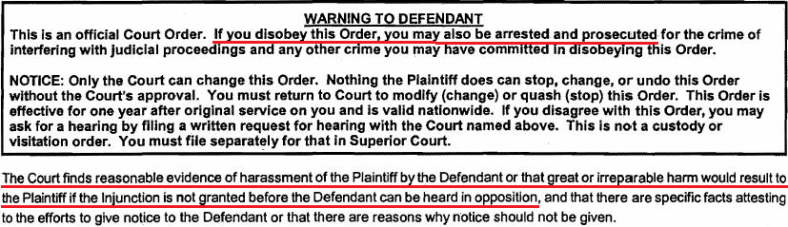
If you receive a restraining order in my home state, here’s the first thing that greets your eye:

On the basis of the form this warning captions—which looks like it was drafted by someone using a pizza crust as a straightedge—citizens are recorded in state and national police databases as stalkers and violent abusers.

Consider that the immediate impression this warning is meant to give is beware. It naturally excites fear—and if you’ve been falsely accused, a host of other emotions, besides, none of which conduces to calm and lucid thinking.

Something you wouldn’t guess from this “Warning to Defendant” is that if a defendant “disagrees” with an order issued in Arizona, s/he has the statutory right to apply for an appeals hearing at any time during the order’s effectiveness. For example, if the duration of the order is one calendar year, the defendant can take 11 months to assemble his or her appeal and save up, if necessary, to have an attorney represent that appeal.

Here’s the law:

At any time during the period during which the injunction is in effect, the defendant is entitled to one hearing on written request. No fee may be charged for requesting a hearing. A hearing that is requested by a defendant shall be held within ten days from the date requested unless the court finds compelling reasons to continue the hearing. The hearing shall be held at the earliest possible time. An ex parte injunction that is issued under this section shall state on its face that the defendant is entitled to a hearing on written request and shall include the name and address of the judicial office where the request may be filed. After the hearing, the court may modify, quash or continue the injunction.

The statute says the court’s order must inform the defendant that s/he’s entitled to a hearing, but it doesn’t require that the order inform the defendant that s/he has a year (or possibly years) in which to prep and apply for that hearing, that the hearing is free, or that the defendant may be represented by an attorney.

Restraining orders are rhetorical psych-outs. Their language is overtly menacing, and neither the law nor the issuing courthouse gives any consideration to apprising defendants of their rights.

The stress is on apprising defendants, who are presumed to suck (sight unseen), of what rights they’re no longer deemed worthy of.

Appreciate that the court’s basis for issuing the document capped with the “Warning” pictured above is nothing more than some allegations from the order’s plaintiff, allegations scrawled on a form and typically made orally to a judge in four or five minutes.



In the courthouse where the order issued against me was obtained, restraining order petitioners file into a room like a small bus station terminal, submit their applications, wait for an audience with a judge, chat with him or her for a few minutes, and leave.

That’s it.

Consequences of receiving an order of the court whose merits are determined on this basis include registration in state and national law enforcement databases, and may also include loss of entitlement to home, children, and possessions, and loss of employment.

In contravention of due process, orders are issued against defendants that may deny them liberties and property without the court’s hearing from them at all.

Ever.

In Arizona, unless a defendant requests a hearing before a judge, that’s an end on the process. No judge will even have learned what s/he looks like, and the truth of the plaintiff’s claims will never have been controverted—claims, to reiterate, that were made in a few minutes and could include anything from annoyance to physical or sexual violence.

Such claims often amount to nothing more certain than finger-pointing.

(Docket time afforded by the court to the testimony of defendants who go to the trouble of appealing rulings based on such claims, incidentally, is about 15 minutes. The cost of attorney representation at an appeals hearing may be $2,000 to $5,000.)

The only provision the law or the court makes for discouraging false testimony (some motives for which are here) is this one, which predictably appears at the very end of the application form:

The plaintiff signs below.

Applicants aren’t of course told what “perjury” is, and they’re certainly not told it’s a felony crime that carries a prison term (as it is and does in Arizona and many other states). Lying to the court is never sanctioned or prosecuted, anyway.

Recent posts on this blog were answers to dismissal by a doctor of laws of criticisms that the restraining order process is unfair. The process would have to be far more deliberative than it is, in fact, to be merely “unfair.”

The process is automated.

Copyright © 2014 RestrainingOrderAbuse.com

Battering Women to Protect Battered Women: Using Massachusetts’s Policies to Examine Restraining Order Publicity and Its Damages

“In the event a Restraining Order is issued for any period of time (initial 10 days or subsequent extension/dismissal), you will be listed in the statewide Domestic Violence Registry system. This could impact your ability to obtain or maintain employment in government, law enforcement, certain medical fields, or social services, or to work with/coach children. Impoundment of the restraining order does not expunge your listing on the statewide domestic violence registry, as certain government agencies and private companies with significant government contracts still have access to the registry system.”

—“Massachusetts Restraining Orders Procedure and Ramifications

I’ve just been corresponding with a Florida woman named Ally who had a domestic violence (209A) protection order petitioned against her in Massachusetts alleging she was a danger to a former boyfriend (these kinds of instruments can be obtained by plaintiffs who don’t even live in the same state or country as their defendants).

Ally contends the allegations against her are false and has been living in hell for over a year.

She’s surviving day to day and can’t afford to procure the services of an attorney. Ally’s trying to defend herself and clear her name with no money and from another time zone. She’s preparing a motion on her own (very possibly ill-fated) to request that the order against her be expunged, because it has ruined her employability.

Note: As the epigraph explains, even were Ally to succeed in having the order simply dismissed (which is itself unlikely), she would still remain registered as a domestic abuser.

From a draft of Ally’s “Motion to Expunge”:

Defendant was refused jobs, [is] not allowed to attend [or] volunteer [at] her daughter’s school events, [and has had] numerous other rights taken away due to Plaintiff’s Abuse of Process and Fraudulent Allegations and written Affidavit to the Court. This continues today.

Note: To successfully combat prosecutions like this requires money…which prosecutions like this prevent their defendants from earning.

A recent post on this blog observed the court’s schizophrenic regard toward restraining orders. On the one hand, they’re viewed by judges as urgent, potentially life-or-death matters; on the other hand, they’re viewed as inconsequential as long as defendants mind their prohibitions for the prescribed period of time.

Ignored is that adjudications both initiated and finalized in minutes yield rulings that are entered into state and national law enforcement databases indefinitely. Orders become “inactive” once they expire, but they don’t disappear. A woman like Ally remains for the rest of her life marked as a perpetrator of domestic violence.

In contrast—and the contrast is a telling one—consider this excerpt from a “Memoradum” issued by the Massachusetts Supreme Court last year on “Internet Dissemination of Personal Protection Order Information.”

As transparency and improved access remain court goals, it is important that we not unknowingly or unintentionally release victims’ personally identifiable information through the Internet, recognizing that this information is easily accessed and that access to such information could be dangerous to victims. Additionally, it has been brought to our attention that current federal law prohibits providing information over the Internet about personal protection orders (PPOs) that would be likely to reveal the identity or location of the petitioner (“PPO Information”).

18 USC 2265(d)(3) states:

A State, Indian tribe, or territory shall not make available publicly on the Internet any information regarding the registration, filing of a petition for, or issuance of a protection order, restraining order, or injunction in either the issuing or enforcing State, tribal or territorial jurisdiction, if such publication would be likely to publicly reveal the identity or location of the party protected under such order. A State, Indian tribe, or territory may share court-generated and law enforcement-generated information contained in secure, governmental registries for protection order enforcement purposes.

The privacy of restraining order plaintiffs (who are nominated “victims”) is to be tightly guarded.

Note: Based on “determinations” formed in minutes and possibly based on nothing more substantial than accusation, a plaintiff is deemed a “victim” whose identity and privacy must be protected, and the defendant is deemed a “violent threat” whose privacy is accordingly due no consideration. After the term of the restraining order has flown, the “danger” to the accuser is assumed to have been resolved, but the accuser continues to enjoy anonymity while the accused must go on bearing the implications of the restraining order for the rest of his or her life, exactly as if those implications were a criminal sentence.

Only in the recent past, in fact, did it even become possible to remove a Massachusetts restraining order defendant’s name from the domestic violence registry if it were found that allegations against him or her were substantially or totally false. (Remember that such allegations are made ex parte in the time it takes to place an order at McDonald’s.)

Until recently, it was almost impossible to expunge a person’s record with the domestic violence registry once the initial entry was made. In the 2006 case of Commissioner of Probation v. Adams, it was recognized that a judge has the inherent authority to expunge a record of an abuse [from the] violence registry system in the rare and limited circumstance that the judge finds the order was obtained through fraud on the court.

Note: The phrase rare…circumstance (of fraud) is emphasized in the original document quoted above (“Massachusetts Restraining Orders Procedure and Ramifications”), which was authored by an all-female law firm (Mavrides Law of Boston). Allegations of rampant restraining order misuse in Massachusetts have actually been the subject of press coverage and at least one law review monograph, and one of the most outspoken critics of restraining orders, attorney Gregory Hession, practices in Massachusetts and has for many years reported that restraining orders are “out of control.”

The previous two posts on this blog were responses to allegations that those who criticize restraining orders and domestic violence laws are “opposed to the battered women’s movement.” Defenders of these laws are urged to ask themselves how Ally’s wanting to be able to provide for her daughter and one day attend her daughter’s graduation has anything to do with battered women at all.

They’re also urged to ask themselves how denying Ally these opportunities isn’t itself an act of brutality.

Copyright © 2014 RestrainingOrderAbuse.com

Connecticut Lawmakers Conclude Getting a Restraining Order Isn’t Easy Enough Already

Those victimized by liars who abuse restraining order and domestic violence laws often blame their judges. It’s natural. They’re the ones who deprive the wrongly accused of dignity, liberty, property, and family—and theirs are the words that echo in the memory and grate on the nerves during the empty hours.

Lawmakers it must be remembered, though, are the enablers.

Judges may be careless. They may even be cruel. But legislators are clueless.

To give an example, consider this story reported today in Hartford, Connecticut’s The Courant (August 25, 2014):

Domestic violence victims need to have a simpler process of applying for restraining orders and better communication with the agencies that handle them, a legislative subcommittee said Monday.

To that end, the subcommittee of the task force on restraining orders agreed to recommend a streamlined version of restraining order applications and an accompanying checklist to pave the way for better communication among victims, marshals and courts.

The Connecticut legislature purposes to make simpler yet a process that’s already so “streamlined” that accusers don’t have to prove anything.

CONN. GEN. STAT. ANN. § 46b-15(b): “The court, in its discretion, may make such orders as it deems appropriate for the protection of the applicant and such dependent children or other persons as the court sees fit.… If an applicant alleges an immediate and present physical danger to the applicant, the court may issue an ex parte order granting such relief as it deems appropriate.”

This literally means that if a domestic partner merely alleges s/he feels in danger, which only takes a few seconds to do, the court is authorized to order the accused to be forcibly ejected from his or her home by armed agents of the state—even if the accused owns that home and has lived in it all of his or her life. In other words (again, for example), it’s entirely possibly for someone who has no home to move in with someone else, falsely accuse him or her of abuse, and for all intents and purposes seize possession of his or her home. Other obvious motives for lying are malice or gaining custody of kids.

No evidence of anything is required by the law, which is a blank check that authorizes accusers to say whatever they feel like and judges to do whatever they feel like.

Members of the legislative subcommittee referenced in The Courant article reportedly expect to improve their understanding of the flaws inherent in the restraining order process by taking a field trip. They plan “a ‘ride along’ with the representative of the state marshals on the panel…to learn more about how restraining orders are served.”

The urgent problem with restraining orders as they see it is ensuring that more of them are successfully delivered.

The article cites concerns expressed by the executive director of the Connecticut Coalition Against Domestic Violence “about the complicated process domestic violence victims face when they apply for restraining orders.”

The “complicated process” to have someone evicted shoeless from his or her home in the Connecticut winter and prohibited access to his or kids based on an allegation is filling out a form.

The Connecticut legislators “decided to remove the instructions in small print at the top of the form, which start with the outdated suggestion that the applicant ‘use a typewriter.’ Applicants will have access to a separate sheet of paper that has step-by-step instructions.”

Authorizing the court “in its discretion” to fill out orders “as it deems appropriate” would seem more expeditious and economical to this writer.

Copyright © 2014 RestrainingOrderAbuse.com

Further Reflections on MSNBC’s Coverage of the First Annual International Conference on Men’s Issues

Rereading MSNBC’s article on the first annual International Conference on Men’s Issues, I have to marvel that so firmly has feminism taken hold that even reporters (whose watchword is objectivity) may respond with Pavlovian menace to an act of civil disobedience—which challenging feminism is.

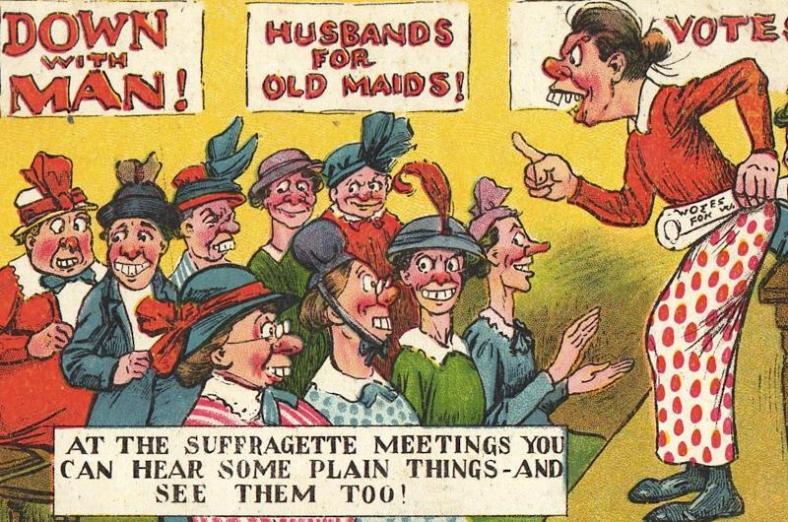
Consider that feminism originates with the 19th-century suffrage movement, that is, with some ragtag groups of women banding together to oppose second-class citizenship and demand the right to vote. Consider, too, that reactions to their early rallies to assert their rights presaged those of the MSNBC reporter who wrote about last month’s men’s conference.

His rhetorical strategies (which, like an apt pupil—or myrmidon—he lifts straight from the feminist playbook) were these:

  • Underrepresent the opposition. The MSNBC piece is surmounted by a photograph (snapped and cropped by the writer) showing a sparsely populated conference room. Some 16 people are visible if you count the odd pair of hands or feet poking into the frame. Though in a passing nod to journalistic accuracy the writer later reports attendees numbered “more than 100,” the first impression the reader is clearly meant to draw is “handful of nutters.”
  • Distort and caricature. Quotations featured in the piece were plainly culled for sensationalist impact. Commentary—for example on the phrase equity feminists, coined by a female feminist philosopher whose acumen is redoubtable—was confidently careless and pandering.
  • Distract. “The conference comes amid increased focus on women’s rights,” the writer observes saliently. Later he quotes a feminist post-grad as saying, “[D]ue to concerns for physical safety, we have decided the best way to oppose the conference that is now going on…is to keep our distance.” The source of fear was unspecified.
  • Ridicule. Pick a paragraph, any paragraph.

Attacks on the efforts of the early suffragists to have their grievances answered were…right, exactly the same.

Copyright © 2014 RestrainingOrderAbuse.com

Confusing Women’s Rights with Feminism: Some Observations on MSNBC’s Coverage of the First Annual International Conference on Men’s Issues

Apparently the first annual International Conference on Men’s Issues was held in Michigan recently. I read this fact on the MSNBC website in an article that disdained even to capitalize the title of the conference and which, for more reasons than just that one, reminded me of the days when I edited my high school paper.

My journalism adviser would’ve given the piece a C, among other reasons because it seems uncertain whether it wants to be a news story or an editorial—or an advertisement for its writer’s Twitter feed.

Its introduction, at least, was gripping to read: “At what was billed as the first annual international conference on men’s issues, feminists were ruining everything.” I was keen to hear about how the meeting was disrupted by a mob of angry women swinging truncheons.

I’ve come to expect disappointment, which expectation the reporter continued to cement over an ensuing two dozen paragraphs.

Not having attended the conference, I can’t say whether the reporter’s characterization of its presenters’ arguments as cranky is fair or not. Remarking that he failed to probe any of the topics he glosses in the article, however, does seem fair. A reporter’s job is to ask questions, not assemble a boa of plucked horsefeathers and hyperlinks.

I’m sympathetic to men’s plaints about legal mockeries that trash lives, including those of children, so I found the MSNBC coverage offensively yellow-tinged in more senses than one, but I’m not what feminists call an MRA or “men’s rights activist.” I don’t think men need any rights the Constitution doesn’t already promise them. What they need is for their government to recognize and honor those rights. The objection to feminism is that it has induced the state to act in wanton violation of citizens’ civil entitlements—not just men’s, but women’s, too.

On this subject, something useful the referenced MSNBC article does accomplish is reveal its writer’s unexamined presupposition that women’s rights and what feminists advocate for are the same thing. Probably many women are under the same illusion.

It’s understandable. Feminism still waves the same banner its pioneers sewed decades ago on which is blazoned that rainbow word EQUALITY. Today’s mainstream feminists, however, have redefined that word to mean “whatever’s best for us,” which doesn’t always mean what’s best for women.

To illustrate, take the 60-year-old woman who wrote last year to relate that she was expelled from the home she’d shared for 10 years with her invalid mother and terminally ill brother, whom she nursed, by her sister. The latter spitefully lied about her to the court—possibly because she was the executor of her mother’s will—and then destroyed her belongings, including her clothes and family memorabilia (photos, videos, etc.—a lifetime’s worth) when it was mandated that she vacate her residence. Her sister’s malicious testimony was rendered in a few minutes without the woman’s even being present. Though the fraudulent restraining order it succeeded in having issued was tossed on appeal, the woman’s record was sufficiently corrupted to cost her her job at a bank and the income and medical benefits it provided. When I last heard from her, she was living out of her car and trying to stay warm.

Or take the naïve girl who was lured away from her family, knocked up, and deserted by a twice-divorced pastor’s son. When the girl appealed to him to take an interest nine months later and moved to Virginia with her newborn on assurances from him that he’d found Jesus and wanted to do right by her, he and his family represented her as a hysteric to the court and, when last I got a status update, were in the process of seeking custody of her baby (cf. Charlotte Perkins Gilman’s “The Yellow Wallpaper”).

These aren’t merely people who “believe” they’ve been treated unfairly; these are women who’ve been used viciously and rolled into the gutter.

Women I’ve corresponded with in the three years I’ve maintained this blog have reported being stripped of their dignity and good repute, their livelihoods, their homes and possessions, and even their children according to prejudicial laws and court processes that are feminist handiworks. These laws and processes favor plaintiffs, who are typically women, so their prejudices are favored by feminists. Feminists decry inequality when it’s non-advantageous. They’re otherwise cool with it. What’s more, when victims of the cause’s interests are women, those victims are just as indifferently shrugged off—as “casualties of war,” perhaps.

I don’t know that feminists are “ruining everything,” but I do know that among the fruits of their industry has been ruining a lot of people’s lives.

Copyright © 2014 RestrainingOrderAbuse.com

No False Motives: On WHY Judges Refuse to Acknowledge Restraining Order Fraud

In the last post, I stressed that the courts refuse to acknowledge false allegations made by restraining order plaintiffs as lies, perjury, or fraud. It’s unlikely courts will call them “true.” Rather they’ll just accept them as given.

This shouldn’t be too surprising considering that the legitimacy and worthiness of the restraining order process is itself unquestioned. Why? Because it’s favored by the feminist establishment, which has gained so much political sway in recent decades that society, particularly its liberal constituency, is inclined to feel that what feminists want is what women want, and what women want is what everyone should want. Even women may not question whether what feminists want is what’s in their best interests. Restraining orders are promoted as positive and empowering for women. Also, they’re there to bring bad guys to bay and advance the causes of peace, justice, and the American way. So what possible grounds could exist for criticizing them? No harm, no foul, right?

The answer to these questions is of course known to (besides men) any number of women who’ve been victimized by the restraining order process. They’re not politicians, though. Or members of the ivory-tower club that determines the course of what we call mainstream feminism. They’re just the people who actually know what they’re talking about, because they’ve been broken by the state like butterflies pinned to a board and slowly vivisected with a nickel by a sadistic child.


And the value of their lives is deemed negligible. They’re what feminist jihadists would likely refer to as casualties of war.

The perpetuation of the restraining order process and the preservation of its appearance of propriety is the product of prejudice and perception mutually reinforcing each other. Public perception is that restraining orders are “good,” because they answer a social need. Judicial perception of restraining order applicants’ motives is accordingly prejudiced by pressures both political and social. If that weren’t enough, it’s also programmed. Courts receive massive federal grants under the Violence Against Women Act (VAWA) in return for having their judges submit to indoctrination.

Thus judges not only ignore whether allegations made on restraining orders are false; they may well assume the position that restraining orders are never sought maliciously (or frivolously).

They do what people expect of them, what the state wants of them, and what accordingly feels righteous and noble. That it’s also in their professional interests is a bonus (as is the possible gratification they derive from making “miscreants” cavil and quail). All of these motives are wrong and are furthermore contrary to judicial ethics (due process, Constitutional privilege, social justice, etc.), but the only people who care about principle are this travesty’s sacrificial lambs.

And they’re mostly silent.

Copyright © 2013 RestrainingOrderAbuse.com

A Safety Seal: What Restraining Orders and Tic Tacs Should Have in Common but Don’t

I’ve written recently about restraining orders’ circumvention of due process and remarked that at the time of their advent—the 1970s—this may have seemed to lawmakers like an urgently necessary evil.

The phrase due process, to recap, refers to granting defendants (like recipients of restraining orders) the opportunity to defend themselves before a judgment is entered on allegations made against them. Restraining orders deny defendants due process, because their guilt is conclusively presumed without judges’ knowing who they are (even so-called “appeals hearings” may afford a defendant no more than a 15-minute audience with a judge who already supposes him or her to be guilty).

To put it baldly, defendants are issued orders from the court that manifestly identify them as creeps and that may summarily (and indefinitely) deprive them access to home, children, money, and property based on the court’s knowing nothing more about them than their names and what someone alleged against them, which the Fourteenth Amendment was drafted to guarantee can’t happen.

The motive for denying restraining order defendants due process—for which legislators are to blame, not judges—was satisfying feminist outrage by ensuring female victims of domestic violence didn’t have to worry about their allegations being discounted or criticized by the police, as they well might have been in the ’70s (imagine being knocked around and terrorized at home then publicly ridiculed or excoriated by authorities—all men—for complaining about it). Restraining orders authorized battered women to take their allegations directly to a judge and thereby be granted immediate relief from unbearable circumstances.

Though social attitudes toward women’s rights and domestic abuse have shifted radically in 30 years (to a vulgar extreme, many might argue), no one, however, has looked back. Restraining orders continue to follow the same policies they did from the start (or laxer ones) and have only become more widely applied and sprouted more and sharper teeth.

The last commentary noted that at the time restraining orders were enacted, legislators assuredly never gave a thought to the possibility that they would be abused.

At that time, no one had considered that somebody might intentionally sabotage foodstuffs or over-the-counter medications, either. It never occurred to manufacturers or government overseers of product safety standards that somebody might poison others just for the fun of doing them harm—or just because they could.

Following Tylenol’s being tampered with in 1981, everything from diced onions to multivitamins requires a safety seal. Naive trust was violated, and legislators responded.


Legal lions, scholars, and journalists have denounced the injustice of restraining orders for 20 years now at least, and any number of lives fractured by wrongfully issued restraining orders have been publicly chronicled. Even government studies have concluded that a majority of restraining orders are sought unnecessarily or falsely and that only a small minority ever even allege violence.

How many more people have to be poisoned by a widely abused judicial process before the same cautionary measures applied to Tic Tacs are applied to it?

Time for a manufacturer recall.

Copyright © 2013 RestrainingOrderAbuse.com

Circumventing Due Process Isn’t Just What Restraining Orders Do—It’s What They Were Designed to Do

detour
“Due process of law implies the right of the person affected thereby to be present before the tribunal which pronounces judgment upon the question of life, liberty, or property, in its most comprehensive sense; to be heard, by testimony or otherwise, and to have the right of controverting, by proof, every material fact which bears on the question of right in the matter involved. If any question of fact or liability be conclusively presumed against him, this is not due process of law.”

Black’s Law Dictionary

The phrase due process (or due process of law) names those most fundamental legal entitlements that ensure an individual is provided the means and opportunity to defend him- or herself and his or her interests in court.

In the previous post, I observed that restraining orders skirt due process entirely—which I’m hardly the first person to remark.

As this post’s epigraph explains, whenever the court presumes that a person is liable for or guilty of some alleged transgression and enters a judgment against that person without first granting that person the opportunity to challenge the allegations against him or her, that person is denied due process.

Not kinda-sorta but flatly.

Since restraining orders (by legislative mandate) are issued ex parte, which means that the only parties judges hear from prior to entering rulings are restraining order applicants, every restraining order recipient is denied due process. Every one of them. Always. Restraining order defendants are just inked names on paper forms; judges have no idea whom they’re entering judgments against, and defendants have no idea judgments have been entered against them until a constable comes knocking.

Restated using legalese from this post’s epigraph, when a defendant’s guilt is “conclusively presumed,” as it is when a judge approves a restraining order, “this is not due process of law.” Restated simply, when rulings are made prior to defendants’ being given a chance to defend themselves, there’s no due process. Restated simplest, restraining orders = no due process = no adherence to the most basic principles of law = dirty pool.

This is an obvious and indisputable fact, and as I stated earlier, I’m hardly the first person to have noted it.

What’s more rarely observed is that denying defendants due process was the purpose of restraining orders’ being enacted. Restraining order legislation, by design, authorizes a plaintiff to communicate his or her allegations directly to a judge, without having to convince any legal authorities of the merits of those allegations, and requires that a judge enter a ruling on those allegations without a plaintiff’s having to face the person s/he’s accused. (Due process is a constitutional guarantee under the Fourteenth Amendment—except when lawmakers say otherwise.)

The motive for this circumvention of due process is now a very dusty one.

Restraining orders were born three decades ago in response to a pressing demand from female advocates for a process that allowed at-risk women, particularly victims of domestic violence, to avoid the pain and humiliation of having to take their claims to the police (who may have discounted those claims or even criticized women for making them) and go straight to a judge, that is, to have the opportunity to quickly and quietly explain their hardships in a situation of security and minimal scrutiny.

In the social climate that predominated in the 1970s, this made sense. Wives were still expected, by and large, to stay home, tend to their kids and kitchens, and mind their husbands. If husbands sometimes got a little free with their hands, that wasn’t something you broadcast to the world.

Restraining orders, which were legal finesses from the outset, were meant to arrest domestic violence and provide abused women with a discreet and minimally agonizing way to communicate abuse to the court and gain immediate relief from it. It certainly wasn’t on the minds of lawmakers at the time (or anyone else) that restraining orders would one day be applied to routine annoyances or that applicants might fabricate allegations or manipulate a free and convenient process for malicious or selfish ends.

Legislators bowed to social pressures for very sympathetic reasons. The problem is they’ve gone right on bowing for 30 years without consideration to how far restraining orders have drifted from their original intent or to whether their denial of due process to defendants is still justifiable.

Today, relative to the millions of restraining orders that are issued every year, it’s only seldom that allegations of violence are made on restraining orders at all.

Which doesn’t at all mean that the presumption of violence (stalking, sex offenses, etc.) isn’t applied to restraining order recipients universally.

Warrant for the continuation of a process whose nuclear cloud has gusted so far from its target demands a retrofit. This isn’t 1979, and there no longer exists any conscionable excuse for denying defendants due process of law. This is 2013, and violating defendants’ civil rights and burdening them thereby with criminal imputations for the rest of their lives is cruel and unusual punishment.

It’s vicious.

The restraining order process either needs to be dusted off and revisited or relegated to the dustbin of history.

Copyright © 2013 RestrainingOrderAbuse.com

“Are You Serious?”: One Commenter’s Experience of Restraining Order Corruption

A commenter on this blog’s Q&A page recently submitted an update on his own ordeal that illumines the contradictions, corruption, and chaos that mar the restraining order process. His story, which I’ve edited for clarity, is worthy of the attention of legislators and should be of interest to anyone who has a stake in these matters or is curious to know how the restraining order process has been debauched since its advent decades ago.

As I mentioned before, I made an attempt to file an order of protection against the scorned sociopathic woman who put one on me. I was told I could not, yet nobody was able to tell me what statute prohibits this or what the law says except, “You cannot put an order of protection on anyone who has one on you.” I did, however, file a motion to dismiss/vacate.

One day last week I was going to visit my mother for lunch—her house is one of the few places I will go. She lives downtown. While on the way to visit her, I decided to make another attempt to file this order of protection. The court building is very close to where my mother lives. I went to the main courthouse and was ultimately told by a clerk (as well as lawyer who had overheard me) that to file a restraining order, I had to go to another building specifically for this. This new courthouse is about three years old. I took a taxi to the new building, made it into the area to file, gave my info, signed in, and waited. Ninety percent of the people there were women, most of whom looked like trouble. There were no secretaries. Questions and answers were audible to everyone. There were some very legitimate people, though I could see a lot of these people were simply looking for trouble. Not one was turned away.

They should get a revolving door put in soon.

There were about 20 forms to fill out. I was handed examples of how to fill them out with arrows, underlines, and check marks to indicate where everything went. I had already filled mine out in advance, using an online PDF. I handed the paperwork in, and it was gone over with me before the helper entered it into the computer. A short while later, a woman called my name. She asked me if had a case with this woman. I said yes. She said she sees I’m in the computer for filing a motion to vacate. She asked, “Vacate what?” I said, “Restraining order.” She told me, “You cannot put an order of protection on a person who has one on you.” I said, “I have not been out of my house in a year. I am the one who needs this. This woman is a scorned sociopath, and she is looking to get me in trouble.” She said a judge usually won’t hear a case like this. I said, “The constitution says we have equal protection under the law.” She said, “Let me see what I can do.” A short while later another woman called me and said the judge will see you at 2. I sat around and phoned my mother to say lunch was off. Two o’clock rolled around. I headed to the courtroom and saw the youngest female judge I have ever encountered (my fourth female judge). I thought to myself, she looks like a nice woman; I think she will be unbiased.

I honestly think people become possessed by demons when they put that black robe on. Most of them, anyway.

While I waited to be called, I did witness a couple of cases that were legit. I also saw some are-you-serious? cases. One woman just wanted her ex-boyfriend to stop calling and bugging her. I thought, no way is she getting one. The judge asked her, “Are you afraid he will hurt you?” She answered, “No.” The judge said, “I cannot issue one if you have no fear of him.” She said, “I don’t think he will hurt me…I don’t want him to bug me,” and fumbled for what else to say. The judge again leaned in, stuck her head forward and said, “I am going to ask you one more time: Do you fear him?” She said, “Yes.” Bingo! You just won a restraining order. Congrats!

Now I was called.

The judge had thought my order was up in a couple weeks, though that was the motion to dismiss. She said, “I cannot give an order of protection to anyone who has one on them from the other party.” I said, “What about the U.S. Constitution and the Illinois Constitution that state citizens have equal protection under the law?” She was cocky and said, “Oh, really. Where exactly does it say that?” I went into my carrier, which has a stack of paperwork for this case, and I pulled out the full constitution and said, “Article1, Section 2: ‘nor be denied the equal protection of the laws.’” I heard gasps at the back of the courtroom. She said, “Well, it is law I cannot give you one.” (By the way, this was the fastest talker I had ever encountered in my life—Adderall added, I’m guessing.) I grabbed my pen and said, “I have looked all over for such laws and cannot find any. Can you give me that statute?” She grabbed a book and said it was in the Illinois restraining order law book (I missed the page number), statute 750:60/215. I tried to find this book or that statute and had no luck. I must have written it down wrong, or she made it up, because she found it as fast as I could put pen to paper.

The good news is she made the restraining order “pending,” and it will be heard the same day as the motion. Her final words were, “You’ve made all the proper steps so far.” Like a game, eh? If that book does exists (I’m sure it does), I’d love to buy a copy!

The statute the judge quoted to him does exist (750 ILCS 60/215):

Mutual orders of protection; correlative separate orders. Mutual orders of protection are prohibited. Correlative separate orders of protection undermine the purposes of this Act and are prohibited unless both parties have properly filed written pleadings, proved past abuse by the other party, given prior written notice to the other party unless excused under Section 217, satisfied all prerequisites for the type of order and each remedy granted, and otherwise complied with this Act. In these cases, the court shall hear relevant evidence, make findings, and issue separate orders in accordance with Sections 214 and 221. The fact that correlative separate orders are issued shall not be a sufficient basis to deny any remedy to petitioner or to prove that the parties are equally at fault or equally endangered.

This statute is over 25 years old and derives from the Illinois Domestic Violence Act of 1986. The commenter above was not a batterer, nor, it’s very likely, were most of the men (and possibly women) who were slated to be issued restraining orders as a consequence of allegations made against them on the afternoon the commenter visited the courthouse (allegations, it’s worthy to note, that may have been coerced by the presiding judge: judicial subornation of perjury). The language of the statute (“protection,” “abuse,” “endangered”) along with the title of the act that instituted it into law plainly suggest that a much narrower application of it was intended by lawmakers than obtains in the administration of restraining orders today.

I find this commenter’s account very credible, as I hope any legislators who may read it will. “Are you serious?” is right.

Copyright © 2013 RestrainingOrderAbuse.com