Fraud is knowingly misrepresenting facts with the intent to mislead, and fraud in restraining order cases—whether in the form of self-serving exaggeration or extravagantly malicious deception—is more the rule than the exception. It’s also more the rule than the exception that fraud is abetted by the courts and authorities.
It’s a misperception, though, that restraining order frauds are diabolically conceived; they may be diabolical, but they’re almost always the product of impulse. It’s also a misperception that judges and police officers have it out for people. The truth is it just feels that way to victims. Critics of restraining orders are liable to sound like conspiracy theorists, because they perceive organization and fell design where there’s really just predictable human self-interest and self-indulgence.
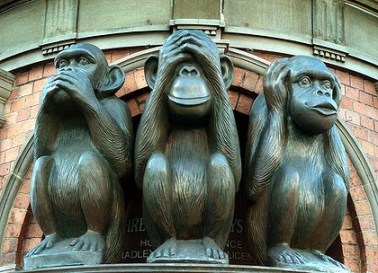 The outrage of restraining order abuse isn’t that it’s archly nefarious; it’s that it’s transparently evil…and readily goes over anyway. Frauds are often self-evident; it’s just that no one looks, because it’s in no one’s interest to look and in the interests of many not to.
Rank abusers of restraining orders aren’t cunning tacticians, typically, but bullies, bastards, and bitches acting on spiteful impulse. The same labels may only apply to facilitators and enablers of restraining order abuse because of the potency with which they mindlessly invest abuser’s frauds. Judges, authorities, and even attorneys are more susceptible to criticism for carelessness than conscious confederacy.
Restraining order fraud works because judges act by rote, having been both trained and conditioned to react mechanically to allegations made against restraining order defendants. The influences that prejudicially mold judicator’s reactions include social, political, and peer expectations. It’s not only safer for judges to presume restraining order applicants are telling the truth; acting as if is what they’re supposed to do. Hefty federal grants are provided to courts that in effect buy judicial cooperation. Judges aren’t paid off, per se, but it’s impressed upon them in no uncertain terms what their priorities should be.
You see how someone could reasonably perceive “conspiracy.” There’s no roundtable of plotters, however. It’s a matter of special interests dictating political policy dictating public practice. Everyone plays his or her role, because it’s in his or her personal interest. Think of a solar system of independent bodies gravitationally revolving around a principle. The principle is bad, and its subscribers may act badly because they’re influenced by it, but there’s no coordinating consciousness or central intelligence.
This isn’t to say there aren’t judges and authorities who like throwing their weight around and watching defendants suffer (or that there aren’t attorneys for whom this is their primary source of glee in life). But it is to say that they wouldn’t be so quick to do it if they didn’t think they could get away with it. The fact is this conduct is tolerated if not expected of them. They may even have been explicitly told to behave this way.
The proper criticism of restraining order policy is that it has conditioned judges to vet facts according to how they’re supposed to interpret them and to make rulings fit expectations. A conspiracy would actually be cleaner. The system, such as it is, allows judges to believe that they’re executing their jobs as they should. Conspirators know they’re up to no good.
It’s less about conspiracy than about social approbation. Fraudulent plaintiffs tend to be patronized by the courts and are sure to receive attention and encouragement from among those in their circles. Judges, too, are rewarded for toeing the line, as are administrators and other politicians.
At the center of this little cosmos is a lie: that restraining orders are administered and administered righteously to protect. From that one fraud, a cornucopia.
Copyright © 2013 RestrainingOrderAbuse.com
 TALKING BACK to restraining orders