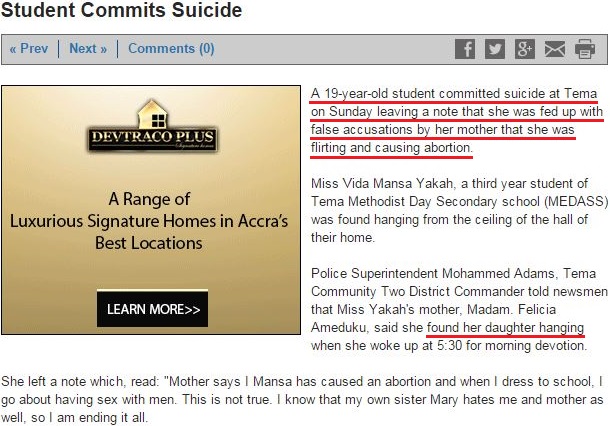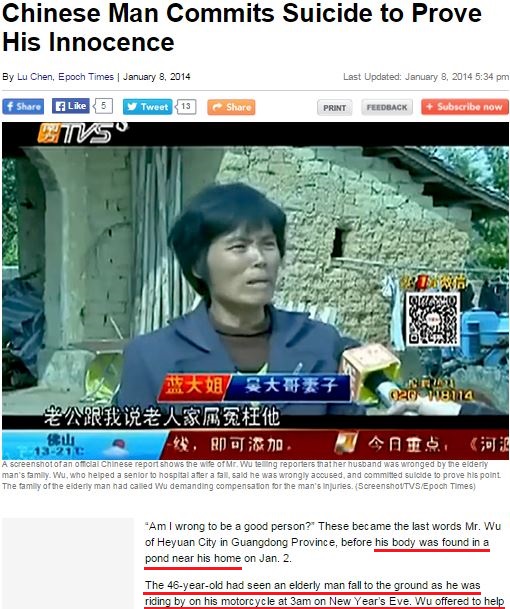
False Accusations and Suicide: Some Headlines about the Effects of Finger-Pointing and Legal Abuse (Culled for the Empathically Challenged)

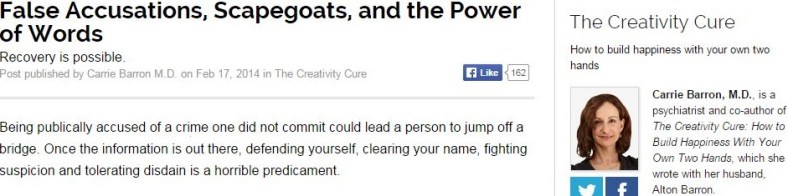
Since the publication of this post, the one quoted above has been deleted.

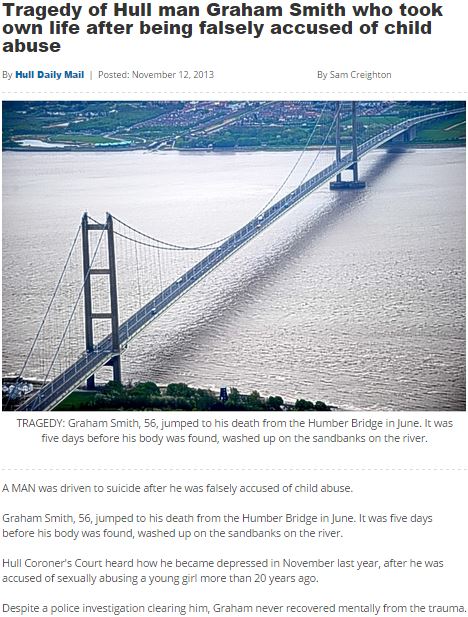
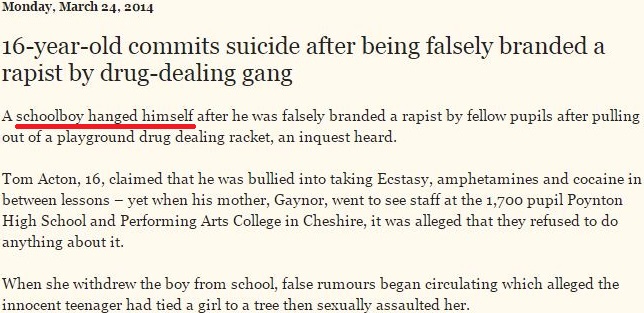
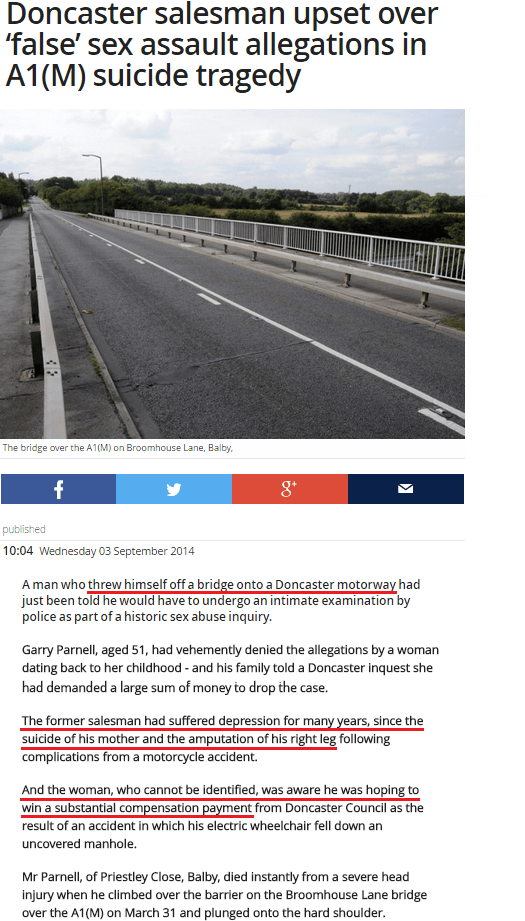
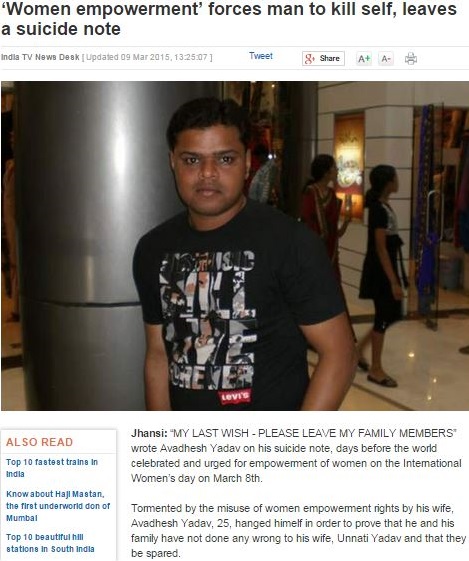
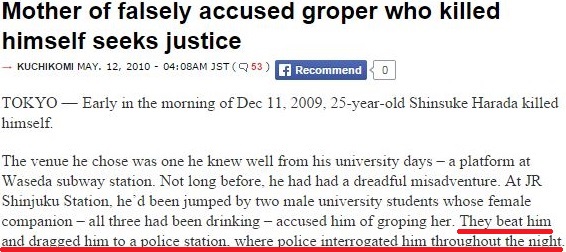
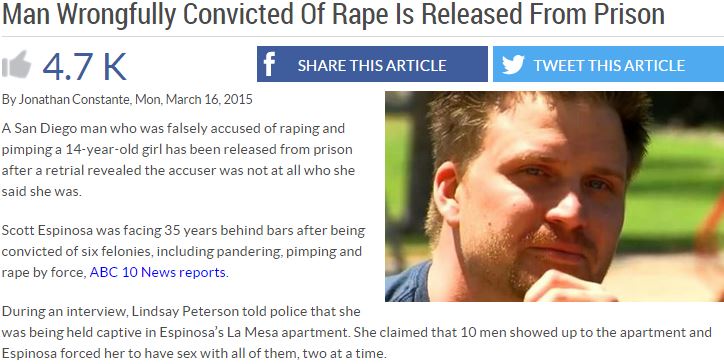
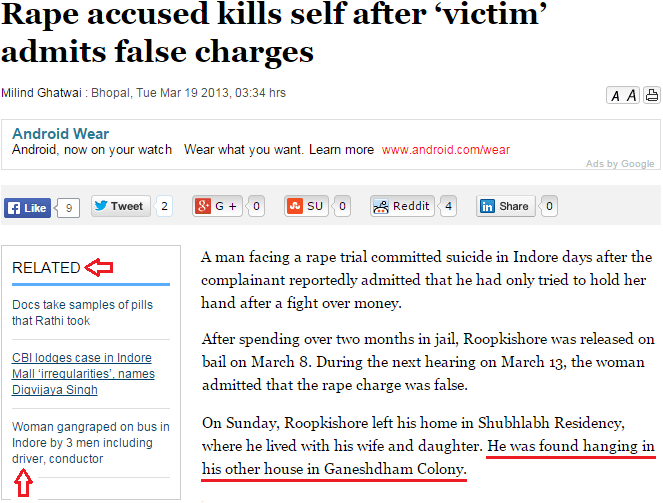
One of the stories highlighted below concerns a young man who was falsely labeled a rapist by some bullies at school. He hanged himself. He was 16. Another concerns a man who spent a year and a half in prison based on a false accusation of sexual assault (among other false accusations). While the man was behind bars, his mother killed herself, believing her son was a pimp and a rapist.

A word to the wise: Only ask a rhetorical question if you know the answer…and it favors your position.

The question posed above by the zealous, young author of Not Sorry Feminism isn’t, of course, a question at all; it’s an indictment. She means how dare anyone think false accusations happen. What problematizes the writer’s rhetorical-question-cum-admonition is that it has a very obvious answer: The reason people think false accusations “happen” (so to speak) is that they do.

(It might alternatively be asserted that no one does believe false accusations “happen,” the same way no one believes rapes “happen.” Both are acts, and both have agents. If rape happens isn’t a construction a feminist could get behind, false accusations happen shouldn’t be, either. You’re a proponent of accountability, or you’re not.)

Worse than her question’s being problematic, because answerable, is that its answer isn’t one the writer wants to hear. Motives for false accusations, including of rape, are greed, malice, bullying, vengeance, jealousy, possessiveness, attention-seeking, mental illness, and cover-up, to name a few. They’re ugly, often petty, always destructive…and they can kill.

This post surveys examples of false allegations or deadly allegations or false and deadly allegations drawn from news stories. Here’s one such:

Unlike most of the rest, the first story glossed in this hastily cobbled digital scrapbook doesn’t include a suicide or references to suicide. It’s nevertheless a good starting point, because it’s old news.

The article’s from 15 years ago. Fifteen. Significantly, though, no half-hearted sleuth would find it a challenge today to turn up commentaries on the Internet, mostly from feminist writers like the one who introduces this post, that either (1) deny such a thing ever happens or (2) deny it’s a big deal when it does happen—and deny it’s a sign that a culture of false accusation exists and has for some time. (A story so uncannily similar as to be almost identical can be found here. It appeared in The Huffington Post less than 24 months ago.)

Consider: Where would six elementary school girls and a boy get the idea of framing their gym teacher as a molester, and where would they get the impression this conduct was okay (or “cool”) or that they’d get away with it and not face dire consequences? Should we believe the notion had no cultural influences and was purely a product of these honors students’ collective wicked imagination?

For accusing their teacher of groping them, the kids were suspended for 10 days. It’s likely the most traumatic part of their punishment was being detained by police and “fingerprinted, photographed, [and] booked.” Keep this thought in mind.

Keep this quotation in mind, too: “‘When they made the charge, that’s about 80 percent of the damage to your reputation right there,’ [attorney Paul F.] Kemp said. ‘Because even if you’re found innocent, people will assume you got off on a technicality. Or that there’s something there when there’s not.’”

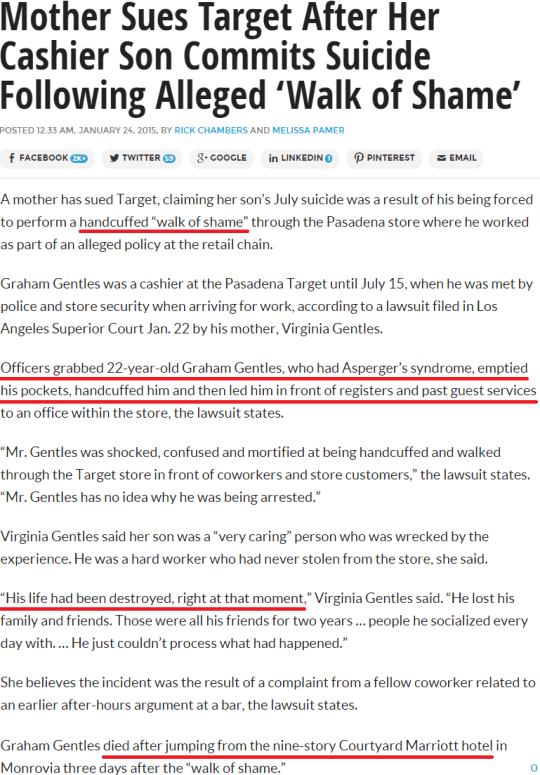
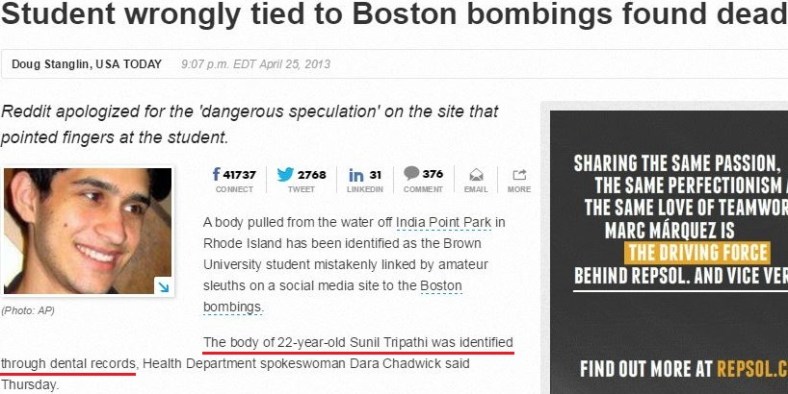
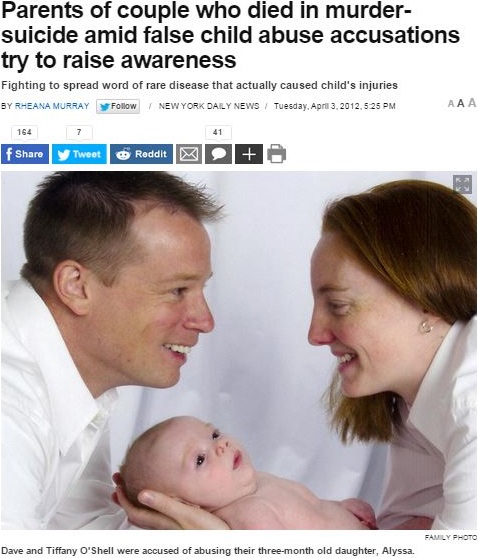
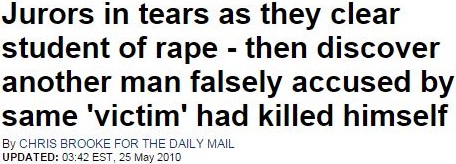
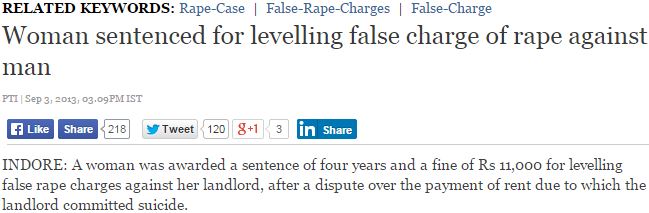
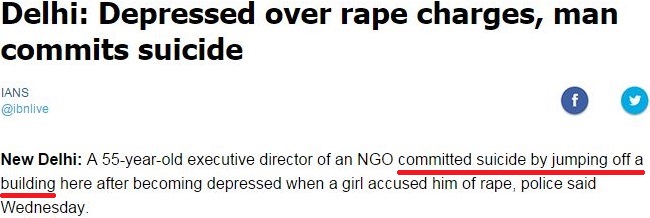
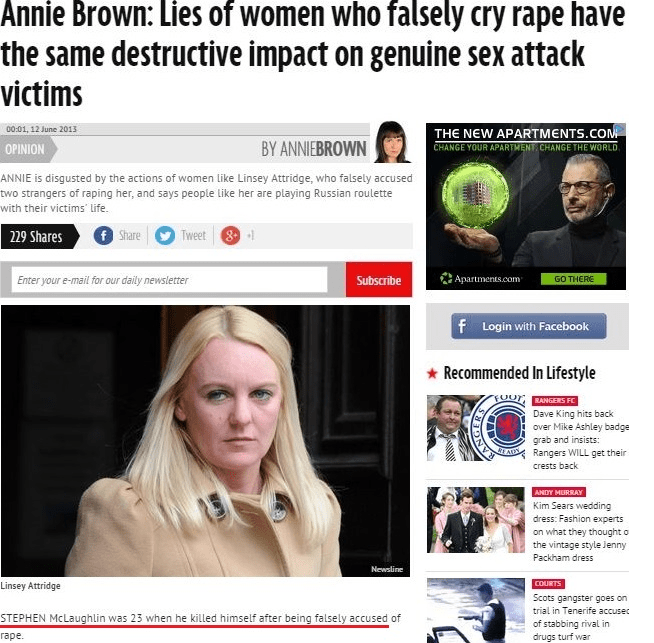
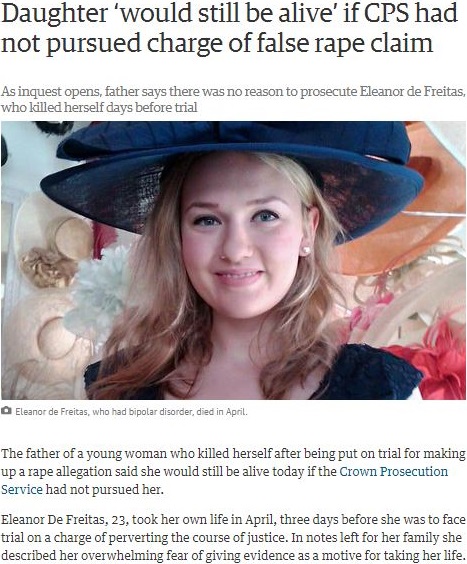
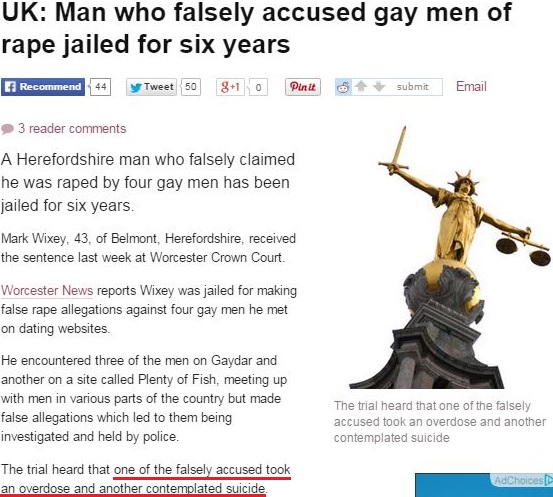
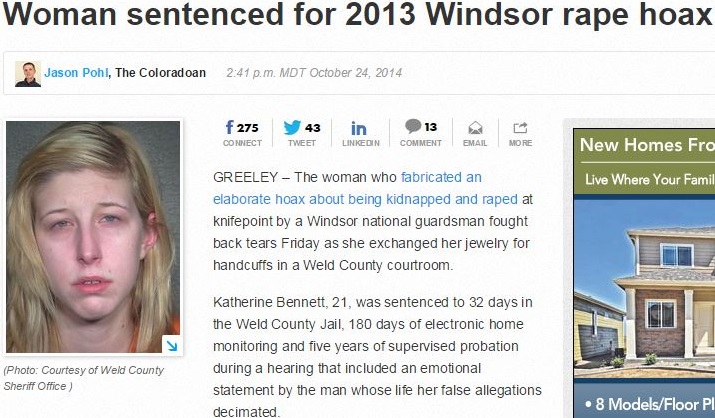
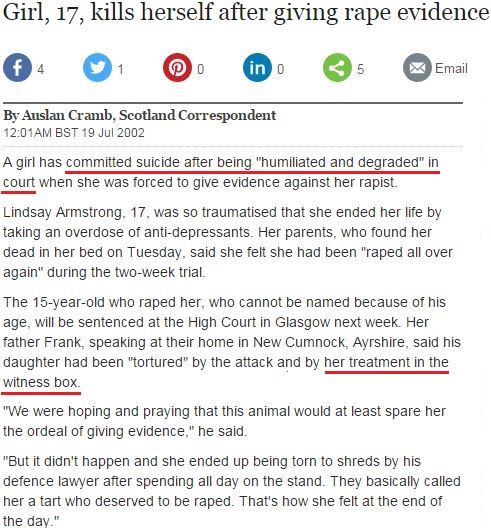
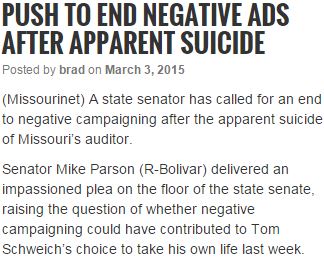
Editorial intrusions end here; the remainder of this post is a series of Internet clippings (linked to the “complete stories”) from which readers may draw their own conclusions about the motives and effects of accusation, bullying, and legal abuse. The author of this post would only point out before absenting himself that an accusation that may induce someone to kill him- or herself need not be of rape and that one of the suicides chronicled below is of a woman who faced being tried for falsely alleging she was sexually assaulted (“In notes left for her family, she described her overwhelming fear of giving evidence…”).

The common denominator is accusation and public scrutiny and judgment, not being accused of a particular act, per se. Zerlina Maxwell and her ilk are categorically wrong.
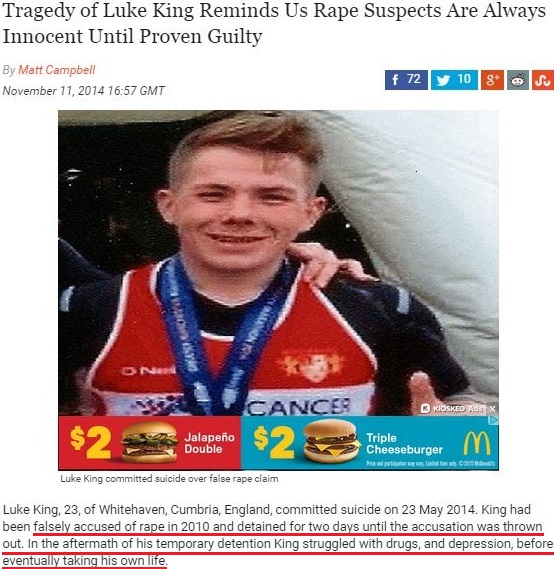
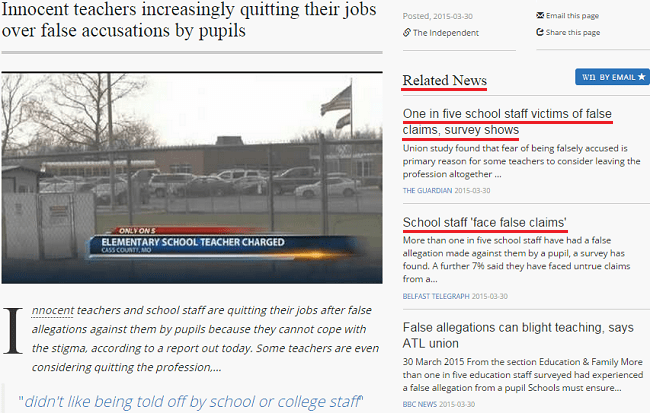
fale_accusations_destroy

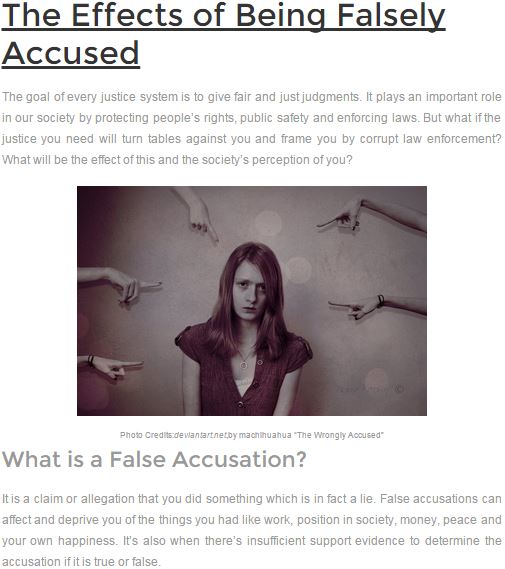
nancy_grace_suit

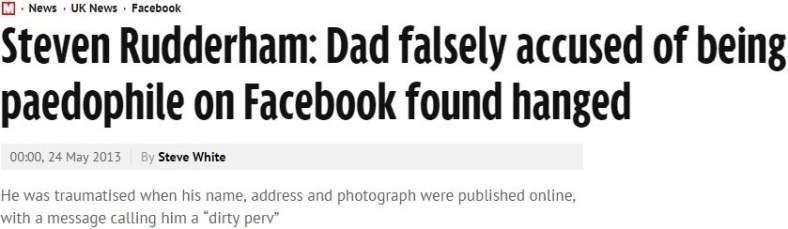
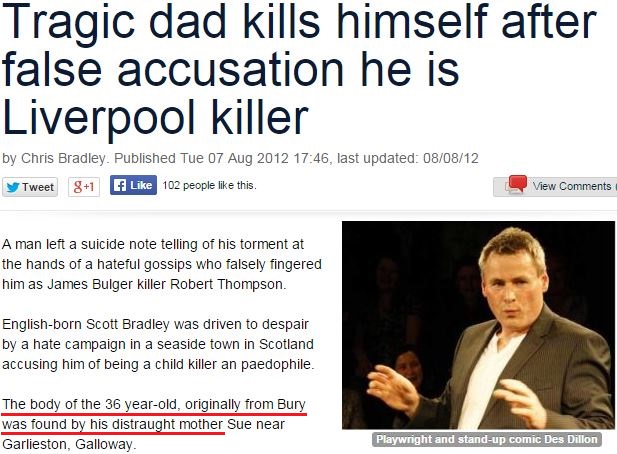
dad_falsely_accused

murder_suicide

jurors_in_tears_full

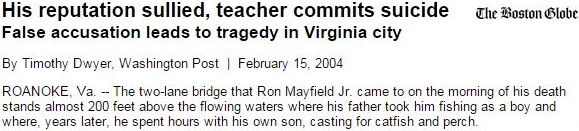
reputation_sullied_full

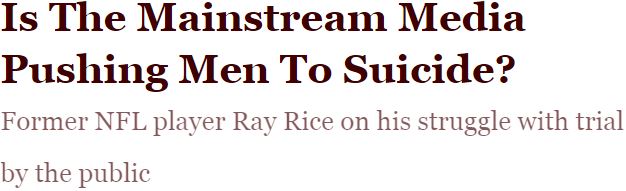
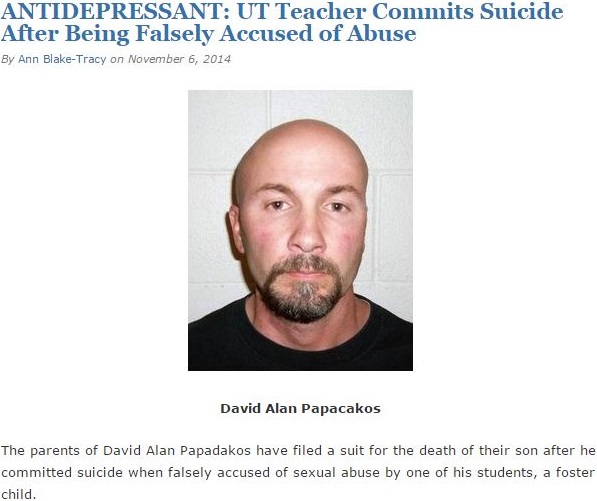
suicidality

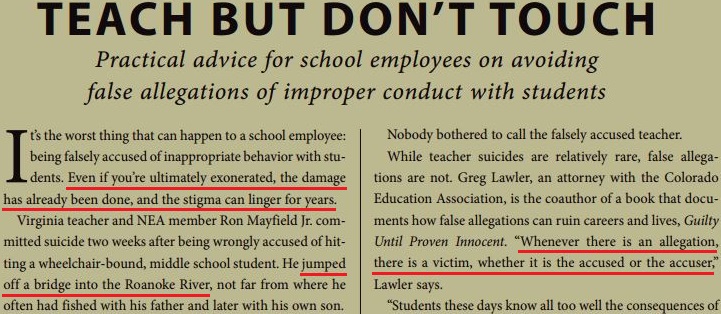
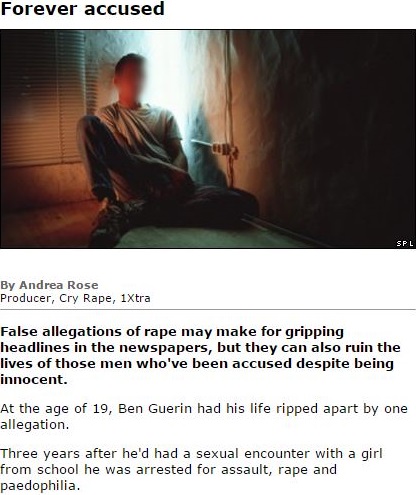
forever_accused

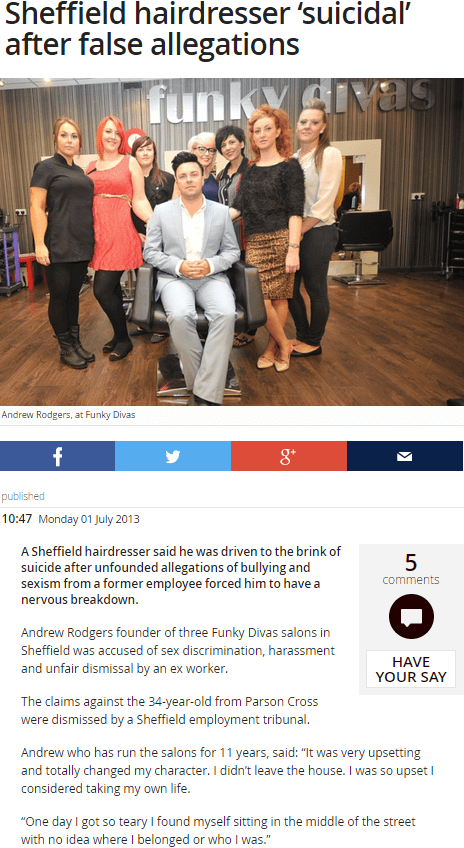
Sheffield_hairdresser

Chinese_man_commits_suicide

Copyright © 2015 RestrainingOrderAbuse.com

Games That Kill: Sex, the “Justice System,” Accusal, Restraining Orders, and “the News”

“‘She likes playing the little mind games too,’ he remarked. ‘She’s not quite as innocent as she makes it out to be.’”
—A Texas man to the police, 16 hours before he killed his girlfriend and himself

The headline reads, “Texas man threatens girlfriend 7 times in a month, then kills her hours after she begs police for help.” The story, however, isn’t so cut-and-dried.

According to Raw Story reporter David Edwards,

33-year-old Heather Coglaiti went to the Corpus Christi Police Department (CCPD) to report that her on-again-off-again boyfriend, José Calderon, had threatened to hurt her, and had slashed her car tires.

While Coglaiti was speaking with officers, Calderon called her cellphone, and he agreed to come in to the station to give his side of the story.

That was February 2, 2015. Coglaiti and Calderon were dead less than a day later. Evidence confirms Calderon shot her, then himself.

“CCPD records showed incidents between the couple going back to January of 2014—including seven death threats and other incidents last month,” Raw Story reports.

It also reports these statements made by Mr. Calderon to the police on the 2nd:

“We’ve done this a lot through the whole two years. We go back and forth, we’ll fight like this and she knows I won’t punch her but she punches the hell out of me in the face and she’ll bite, do whatever,” he said.

“She said, ‘I’m so scared you’re gonna kill me,’” Calderon admitted during the interview. “I’ve never said that out of my mouth.”

“Never do I ever threaten this lady. Never,” he insisted. “I don’t know why she says this and that.”

Raw Story relates the facts, and it relates them almost as a news source should: objectively. Mr. Edwards, the reporter, might properly have said, however, of the “seven death threats and other incidents” (and earlier “incidents”) that they were “alleged” or “reported.” Plainly from Mr. Calderon’s statements to the police, he didn’t put any death threats on paper and sign them; he says he never made any at all. So “alleged death threats and other incidents” is what the journalist should have written (even at the risk of the story’s sounding less “raw”). The headline reports a “Texas man threatens girlfriend 7 times in a month, then kills her.” That the Texas man’s girlfriend is dead by his hand is forensically ascertainable, more or less; that the Texas man threatened his girlfriend seven times in a month is not.

This isn’t pettifoggery. Distinctions like this aren’t minor, and they betray how we interpret allegations: We believe they must be true. Objectivity, if not skepticism, though, is the journalist’s brief, not credulity.

Credulity is especially prone to kick in if it seems warranted by later circumstances, for example, a homicide. Nevertheless, there’s no tweezing out whether Ms. Coglaiti’s reports to the police were accurate, and there’s no knowing what influence they may have had on Mr. Calderon’s actions.

A murderer isn’t given the benefit of the doubt. Significantly, however, neither is anyone else. Accusations are taken at face value (particularly accusations of threats or violence made by women against men).

We discount the effect that allegation and scrutiny have on the mind, and discounting that effect may have cost a woman her life. Not only must it be acknowledged that “the system” failed to protect a complainant of fear; it must be owned that use and abuse of “the system” affects the mental state of the accused, as it may well have in this case.

It may be harsh to ask why a woman who had alleged she’d been threatened with death seven times in a month and who had reported other incidents to the police over the course of a year hadn’t relocated and changed her phone number. But the scrupulous thinker must wonder.

Dogma has it that it’s wrong to second-guess “the victim.” Who was or wasn’t a victim of what in this case, however, is probably something no one will ever conclusively know.

The scrupulous thinker must ask himself why a man who intended to commit murder would voluntarily submit to police questioning, and what might it suggest that he committed murder less than a day later?

Did he avert suspicion just long enough to carry out his fell plot, or was he pushed further than he could tolerate? One interpretation certainly jibes better with PC dogma. Is the former, though, really likelier than the latter?

Raw Story’s reportage ends:

At a press conference on Tuesday, CCPD officials said that they did all that they could do to protect Coglaiti under state and federal laws.

CCPD Criminal Investigative Division Captain Hollis Bowers explained that victims were often frustrated by the legal system.

“The law not only gives us authority, but it restricts our authority so the system works in a very methodical way,” Bowers said. “Victims need to understand that when [we] start to suggest that you leave your home or your job, it’s for immediate safety, not because the legal system needs that.”

He pointed out that an emergency protective order requires “a certain level of violence.”

“So a protective order can’t be—criminal mischief, for instance, will not reach a level where somebody can get a protective order,” Bowers noted. “It requires violence at a certain level. It is issued by a judge.”

Two things, finally, are worthy of remark. First, those who induce people to trust that “the system” may be relied upon to protect them from threat mislead them and may be to blame for harm they subsequently, if not consequently, come to. Second, if Mr. Calderon’s intentions were what they’ve been represented to be, the issuance of a “protective order” against him would probably have led to the same tragic end.

“The system” fails not because it isn’t stringent enough; it fails because the premises for its reasoning are bad.

Casualties like Ms. Coglaiti are eagerly offered up by advocates as corroborations that stiffer laws are required. The facts of her death and the value of her life are conveniently exploited, even as they’re conveniently forgotten.

Copyright © 2015 RestrainingOrderAbuse.com