What “the Law” Means in the Restraining Order Arena and Why All Reasonable Expectations Defendants Have Are Wrong, Wrong, Wrong

  • “I put a restraining order on my ex-husband. Now he’s depressed and staying in his truck.”
  • “Can a restraining order result in suicide?”
  • “Get [a] restraining order lifted for job.”
  • “Can a restraining order be appealed if there isn’t evidence?”
  • “How will it affect my child custody if I filed a false order for protection?”
  • “What if my abuser files [a] restraining order against me?”
  • “My daughter falsely accused her stepmother of civil stalking.”
  • “Falsely accused of breaking a protection order.”
  • “A crazy person filed a restraining order on me.”
  • “Teacher falsely accused [in] Ohio.”
  • “Girlfriend filed a frivolous, retaliatory protection order against me.”
  • “I’m falsely accused. I need help. My ex has [a] protective order on me. I’m the victim, not him.”
  • “Suicide [and] false accusations.”
  • “I was served a domestic violence restraining order, but I don’t see any evidence.”

—Some recent search terms that led visitors here (punctuation added)

Victims of restraining order fraud often voice the conviction that restraining orders require evidence, because trials, we’ve been led to believe, must have an ascertainable basis; you can’t just summon a person to court for whatever. They also express the conviction that plaintiffs “can’t” lie. After all, accusers are made to swear an oath to tell “nothing but the truth.” They should be in trouble if they lie. They should go to jail.

These expectations are all reasonable ones…but they’re wrong.

Q: To get a restraining order, you have to have proof, right?

A: No. “Proof” is not the standard by which civil restraining order allegations are judged. Also, a person can’t “prove” s/he’s afraid; all s/he can do is say so, and his or her say-so is all that’s required.

Q: But if you have proof your accuser is lying, the restraining order has to be dismissed…doesn’t it?

A: No. This is the expectation of everyone summoned before a judge, for obvious reasons: Allegations aren’t facts, and only facts can mean someone is “guilty” of something. Restraining orders, however, don’t require evidence of anything or a determination of “guilt” of anything. What “provable” facts may exist are only as relevant as a judge elects to make them.

Q: A restraining order can be finalized even if a judge knows the plaintiff is lying?

A: Yes. Oath-swearing is just a ritual; lying doesn’t invalidate a petition. Restraining order statutes don’t have a “truth” standard. A person files a petition. If the alleged grounds satisfy the law according to a judge’s personal standards—and a judge’s personal standards are the legal standard—s/he’s authorized to approve the petition. In a subsequent hearing, even if the veracity of the plaintiff is controverted, the law doesn’t require that the order be dismissed. That’s up to the judge. Often if a judge can find a reason to “believe” the plaintiff has a reason to feel harassed or afraid, based on nothing but what the plaintiff says s/he feels, that’s sufficient (even if s/he has given false testimony). Glaringly false allegations may rile a judge, but the law doesn’t require him or her to dismiss a petition on those grounds (or on any others).

Q: So a judge can do whatever s/he wants on no grounds or even on bad ones?

A: Right (a judge who may not be a lawyer or even have a college degree). The only grounds necessary are that someone submitted an application.

Q: And if a plaintiff lies to get a restraining order, s/he can also lie to have someone arrested?

A: S/he can call the police every day if s/he wants to, and allege anything. There’s also no statutory ceiling on the number of restraining orders someone can petition (for free, usually), and subsequent allegations are that much more easily put over, and subsequent orders that much more easily obtained, once one has been approved. Some people are dragged into court relentlessly.

Q: So it’s like that story by Kafka?

A: Exactly like it (with some Lewis Carroll mixed in).

Copyright © 2015 RestrainingOrderAbuse.com

*On this basis, people are removed from their homes, stripped of all possessions, denied a role in their children’s lives, incarcerated, and left broke(n) and homeless. Some kill themselves.
Women Are Bigmouths: Why This Has Been Bad for People Who’ve Been Abused by the Court…but COULD Be Good

I grudgingly constructed a page this week on Facebook, which confirmed to me two things I already knew: (1) I really hate Facebook, and (2) women are more socially networked than men.
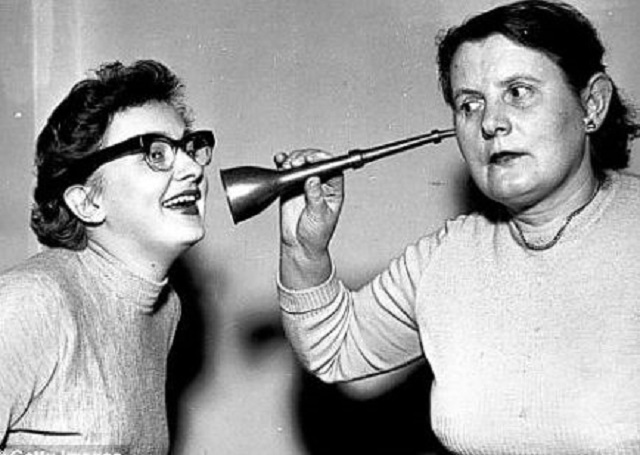
Calling women “bigmouths” isn’t strictly right, and people affronted by the assertion will insist women and men talk about the same amount, or that men talk more than women do.

Uh-huh.

Not impolite to observe is that women “collaborate” more than men do, that is, they sooner work in tandem, which is what statistics I gleaned from Facebook corroborate.

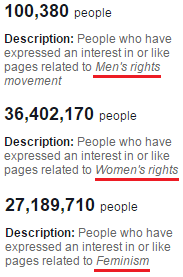
“Tell us about the people you’d most like to connect with,” Facebook urges when you piece together a page on its site. My entries under “Interests” brought up terms like Men’s rights movement, Feminism, and Women’s rights. Accompanying these topics were figures about how many others had expressed an interest in connecting with people who shared those interests.

See for yourself.

Notice that 200 to 400 times greater interest in bonding with people concerned with women’s rights has been shown than interest in bonding with people concerned with men’s rights. That’s a lot…A LOT a lot.

I don’t think there’s anyone who would deny that the fruits of feminism owe to social networking. Some of these fruits have been great; some really horrible. This blog concerns the rotten ones: a culture of victimhood and false accusation combined with the legislation of accelerated and derelict legal procedures presided over by judges bigoted by politics, bad practices (including engineered social science), and money.

Men have been the majority of victims, and they’ve been the only source of concentrated complaint, concentrated complaint that’s been mocked and muted. If we can assume the 200 to 400 times greater interest shown in women’s rights translates more or less proportionally to the number of people disinterested in or opposed to men’s beefs, then no wonder. Female influence, which is significantly feminist influence, is vastly predominant. The sympathy market has been cornered.

Men aren’t the only victims of procedural abuse, however.

Many if not most of the victims who comment on this blog are women, and they’re often desolate. Some live like hermits, some like refugees. They feel exiled and isolated.

The irony is this is exactly how women felt before the rise of feminism, and there’s a lesson to be taken from that.

Men’s struggles for a market share of sympathy face a phalanx of resistance and the priority of conditioned sentiment (prejudice); they’re also troubled by men’s lesser inclination to work collaboratively (the maverick mentality is a losing one). Women, however, can work from behind the lines. They can tap into the women’s rights network and harness its power.

And they should.

Copyright © 2015 RestrainingOrderAbuse.com

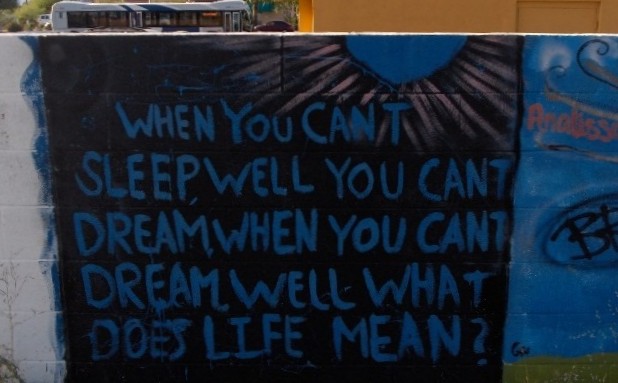
“When You Can’t Dream Well, What Does Life Mean?”: Revisiting Legal Abuse Syndrome

A past series of posts on this blog introduced Legal Abuse Syndrome (LAS). Two of the posts detailed its effects: “Courthouse Violations and PTSD: What Is ‘Legal Abuse Syndrome’?” and “Abandon All Hope Ye Who Enter Here: The Hell of Legal Abuse Syndrome.”

This panel of a mural I encountered recently while walking aimlessly with my dog, who has grown aged since our lives were derailed by legal frauds beginning nine years ago, sums up those effects succinctly.

Copyright © 2015 RestrainingOrderAbuse.com

ManBoobz and Subreddits: Why Your Abuse by the Justice System Is Less Important than a Communal Toilet


“Man Boobz has a contingent of MRA commentors, but he has never (to his knowledge) changed any of their minds.”

Kate Donovan, TeenSkepchick.org

Even at the risk of giving the impression that what the epigraph means is worth understanding, I’ll interpret: ManBoobz.com is the domain name of a website that mocks “MRAs” or “Men’s Rights activists.” (The grammar of the quoted writer, Kate Donovan, also humorously suggests “Man Boobz” is a nickname of the website’s author, David Futrelle—which, admittedly, is why I lifted the sentence.)

If you’re like me, you’ll be filing this information under the mental tab WHATEVER. So why do I bring this up?

In recent weeks, I’ve corresponded with and written about

This is besides digesting copious nauseating and desolate reports of abuse compounded by legal fraud submitted by both men and women. A respondent the other day, for example, reported she’d been chronically forced to have sex and was then issued a restraining order petitioned by her rapist, who endeavors to expel her from the life of an older woman she nurses, an older woman she loves and thinks of as her “grandmother.” The man has also cost the girl work by telling people she’s crazy. He’s apparently concerned she might pose a risk to his inheriting the older woman’s estate…besides concerned she might expose him as a rapist.

Dilettante demagogue Dave Futrelle has “document[ed] and mock[ed]” male complaints of injustice since 2010. Today a fulltime heckler, he supports himself and his cats with advertising revenues and online donations from feminist fans.

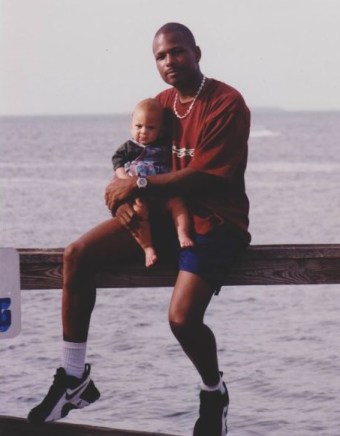
In writing about the black dad who now has an “18%” share in the lives of his two infant boys (“who go insane when I have to drop them back to their mother”), I was moved to criticize the rhetoric of the Southern Poverty Law Center, which represents itself as a civil rights advocacy group. The SPLC publishes a page called, “Misogyny: The Sites,” that suggests opposition to feminist-inspired legal travesties (for instance, the restraining order) is motivated by hatred of women, and on this page it refers approvingly to ManBoobz.com, the site introduced above.

The domain name ManBoobz.com leads to the blog We Hunted the Mammoth, whose title is apparently a lampoon of the titles of “MRM” (Men’s Rights Movement) blogs like Return of Kings. “We Hunted the Mammoth” is meant to suggest the Men’s Rights people are Neanderthals. Yuk-yuk.

If you’re a parent who’s missing his or her children, an abused (former) spouse or boy- or girlfriend who’s now homeless or living “like a hamster” consequent to misapplications of the law, or a senior who’s been bullied into cowering behind his or her blinds, this post is to make you aware of the trash talk that has cost you what you valued most; that talk is what informs pop culture sentiment and diverts awareness from your torment.

The anti-MRM crowd—of whom David Futrelle, author of We Hunted the Mammoth, is apparently a bellwether—represents the complaints of men/fathers to be unprovoked hate rhetoric (and anyone, man or woman, whose complaints are identified as corresponding to MRM complaints is simply lumped in). Calling complaints of state-sanctioned abuses “misogynist” makes them easy to dismiss. The conclusion that complaints are “misogynist” is plainly superficial but not unpredictably embraced by feminist partisans.

Here’s a snippet from a recent post on We Hunted the Mammoth (selected because I don’t have the stomach to stick my hand all the way into the bowl):

Men’s Rights Redditors agree: it’s tough to be a man. Well, a cis man, in any case. And those silly trans people are making it worse.

On the Men’s Rights subreddit, one concerned fellow has discovered a possibly insurmountable obstacle standing in the way of true gender equality: A “Women’s Room” at the University of Queensland that, as a sign on its door notes, is open to “trans*, intersex and genderqueer people as well as cis-females.” The horror!

The post concerns a sign on the door of a University of Queensland toilet. That’s right: a toilet.

(Apparently chemical prefixes are now used to distinguish different “gender types.” A “cis” is what most of us would naïvely call a heterosexual man or woman.)

Here’s an excerpt from another post:

Yep, I reported the 100% true fact that a Youtube bloviater named Aaron Clarey had written a post on Return of Kings urging men, in his words, to “not only REFUSE to see the movie, but spread the word to as many men as possible.” I described his readers on Return of Kings as misogynists, not MRAs, though clearly there is a massive overlap between those two groups.

The idea that this was specifically a Men’s Rights crusade was, to be sure, a bit of sloppiness on the part of the journalists writing about it, who are not quite as familiar as some of us are with all the different varieties of woman-hating shitheads there are in the “manosphere”—especially since their belief systems overlap considerably. As I noted in a previous post on this subject, writing about Esmay’s accusations against a writer for the Huffington Post,

It’s true that the HuffPo writer, in the original version of her piece, wrongly described the MRA-adjacent Return of Kings—which has urged a boymancott of Mad Max Fury Road—as a Men’s Rights site proper. There are in fact some differences between ROK and AVFM. For example, while AVFM writers have declared women to be “obnoxious cunts,” who control men with their vaginas, ROK writers have suggested that women are actually depraved, disloyal sheep.

You can almost forgive journalists for getting a bit mixed up.

The post has something to do with a recent movie (Mad Max: Fury Road). As of this composition, it’s been tweeted 27 times and circulated on Facebook 98 times. It was more popular than the toilet post…maybe because it has dirty words in it.

The writing is virtually indecipherable to outsiders but communicates the nature and maturity of the “discourse” (i.e., teenage). This sniping has “evolved” (or escalated unchecked by the reproofs of grownups) to the stage that it has its own jargon and insider acronyms.

Noteworthy is that Mr. Futrelle’s tirades are in each instance against a single person: “one concerned fellow” and “a YouTube bloviator.” Whether these two men represent the “Men’s Rights Movement” is clearly questionable. Here, incidentally, is a clipping that shows topics surveyed on the Men’s Rights “subreddit” (r/MensRights) that Mr. Futrelle criticizes, topics that paint a different picture from the one his writing does.

Among the members of this so-called collective of haters who posted yesterday are a “self-reflective feminist,” a defender of an elderly man with dementia who was reportedly assaulted, and a father who alleges he was falsely accused of child abuse.

Issues these posts purport to concern seem no less worthy than those feminists raise. Mr. Futrelle nevertheless categorically calls contributors a “hate group,” as does the Southern Poverty Law Center. Ms. Donovan, the girl or woman quoted in the epigraph, offers this interpretation:

MRA stands (loosely, and inaccurately) for the Men’s Rights Activists. More correctly, the MRA movement has enveloped a terrifying sector of the population that feels women and particularly feminists are devoted to squashing the given rights of men in every way. This ranges from belief that women deserve abuse to abusing evolutionary psychology to claim that women are just genetically inferior and will remain that way.

While you, the reader of this post, perhaps sit huddled in a dark corner wondering at the maliciousness of Fate, wondering whether your estranged child or children are safe, wondering if you’ll ever vigorously embrace life again—this is how your pain is perceived (or at least represented) by the feminist “smart set,” which celebrates specialized toilets and mocks you as a “misogynist” and a crybaby.

Copyright © 2015 RestrainingOrderAbuse.com

*Consider this woman’s post to the “subreddit” r/AskFeminists: “Why do Feminists hate ‘MRAs’ and portray them poorly?

You Don’t Want to “Be a Part of It”: Commentary on New York’s Protection Order Biz

I corresponded with a man last year, a man in a homosexual relationship, who was assaulted by his partner severely enough to require the ministrations of a surgeon. His boyfriend was issued a restraining order coincident to his being charged with assault. That’s how it typically works in New York: A protection order is issued following a criminal complaint.

The man who wrote reported that he contacted the violent partner while the order was in effect to impress upon him how badly he had been hurt. The boyfriend used the contact to have the assault charge reduced and to obtain a protection order of his own, which he then abused serially to drive the man he had assaulted from his job and eventually from the state. This only required that he repeatedly claim he felt threatened, which is what he did. (According to the man, “The DA did not even try to substantiate my ex’s allegations and pursued the case to the utmost of his ability.”) The law licenses “mandatory arrest” under such circumstances. Arresting officers told the man all they needed was his accuser’s statement. (It didn’t matter who the actual victim was.)

The man was badly traumatized, at least as much by the lies and legal abuse as by the violence. Though he can’t look in the mirror without being reminded of it—one of its mementos is a scar under his eye—the effects of the violence subsided; the lies and legal abuse eventuated in his public disgrace, alienation from his friends, his being arrested at his place of work, and his being asked to leave by his employer after his business dried up and he had accrued massive debts, including from legal fees and medical treatment for PTSD and depression. He says he developed “terrible agoraphobia” (“afraid I would inadvertently run into my ex and have him accuse me of anything just to have me arrested yet again”) and continues to suffer nightmares (“that cause great daily despair”) even now—in another state where he fled to the safety of his family and where he gets by on disability insurance while he plots a reemergence secure from the risk of further legal assaults.

His story, which has here been stripped of detail to preserve his confidentiality, should serve to inject some color into the black-and-white tutorial on New York protection orders that’s examined below.


I digested a page on protection orders recently that was prepped for the New York Court System by the very earnest Judge Penelope D. Clute. It obliquely highlights absurdities in the system that merit some remark.

According to the judge, there are two types of protection orders: “stay away” orders and “refrain from” orders.

The former are pretty straightforward in their prohibitions:

  • No physical contact of any kind.
  • Stay away from the home, school, business or place of employment of the person named in the Order.
  • No phone calls.
  • No letters, emails, or faxes.
  • No messages through other people.
  • No presents.
  • No contacting the person in any way at all, even if you are invited to talk or meet by that person.

Note the last line—and note that it is the last line.

It acknowledges that people who are nominated “victims” on protection orders may entice their “abusers” to contact them. The quotation marks around the words victims and abusers in the previous sentence are there to stress that the language used by the courts and inscribed in the law is suspect. The court itself recognizes that there are cases when “victims” invite “abusers” to chat or hang out (or move in). As the story that introduces this post shows, besides, there are instances when actual victims seek the understanding of abusers, and this may come with its own host of complications and horrors.

Attorneys like these know very well that allegations of abuse may be hyped or fraudulent.

Unstated in Judge Clute’s bullet list is that the burden of blame falls on the accused even if s/he’s invited to violate the court’s order. Unstated but implicit is that “victims” may not be victims, and “abusers” may not be abusers. Entirely unconscious is that telling people whom they are or are not “permitted” to send a message or gift to contravenes the basic principles of liberty we define ourselves by and pride ourselves on. Restraining orders obviate the chance of reconciliation between parties in conflict by criminalizing contact and making what may be strained relations wholly and possibly virulently antagonistic.

(But, I hear you counter, you sacrifice your freedom when you violate the law. The issuance of a restraining order may be in conjunction with a criminal case, as it commonly is in New York, or it may not bedoesn’t necessarily require proof conclusive of anything; isn’t itself a criminal judgment but an admonitory one; and may be grounded on cranky interpretations of perfectly lawful acts, on lies constituting fraud, or on mere finger-pointing and a few moments of the court’s attention only. The issuance of a restraining order is, however, regarded as a criminal judgment, even in the absence of a criminal charge, and a finding that the order was violated is a criminal judgment. Appreciate that a violation could be the “abuser’s” calling the “victim” and reporting, “Your dad phoned and says your mom’s been in an accident.” A restraining order makes that act criminal, and the court’s prohibitions aren’t negotiable. Restraining orders make perfectly lawful acts, even morally imperative acts, criminal ones, ones you may be arrested for, denied jobs and housing for, and/or deported for.)

These contradictions will likely be familiar to the repeat reader.

Fascinating to learn of was New York’s “refrain from” order. Its contradictions are less likely to be familiar. According to Judge Clute, if you’re issued a “refrain from” order, “you can live together and have contact, but you’re prohibited from harassing, intimidating, threatening, or otherwise interfering with the person protected by the Order.”

This means, evidently and bizarrely, that there are people dwelling under the same roof as their accusers who may be cited for criminal contempt if an accuser calls and reports them for “harassment” that occurred, for example, in the hallway or the kitchen. The implications, which are fairly stunning, bring to mind the phrase “sleeping with the enemy.” The law invests its complete faith in the virtuousness of accusers’ motives. What will be plain to anyone who’s been falsely accused is that an accuser who’s been granted a “refrain from” order and resides with his or her “abuser” holds the life of the accused in the palm of his or her hand.

A writer for the feminist house organ Jezebel might ask, “Why would anyone make a false accusation of harassment, intimidation, or threat? What could be gained by that?”

Since feminists aren’t actually obtuse, the question doesn’t require an answer. Pretending, though, that they are obtuse, here is one: A residence could be gained by making a false accusation. Property could be. Children could be. Revenge could be (see the introduction above). Attention could be. The list goes on.

Judge Clute wraps up her tutorial on protection orders with this advice on “How Defendants Can Avoid Problems,” which reinforces the earlier observations that “victims” may call their “abusers” or otherwise attempt to reconcile, and which notes, besides, how a court order may stir conflict and confrontation with “family or friends.”

  • Do not go to places where you know the other person goes.
  • Leave a building, restaurant, store, or other place if you realize that the other person is there.
  • Hang up the phone immediately if the person calls you. Record the call on your answering machine, if possible. Tell your lawyer about the call.
  • Do not send letters, emails, or faxes to the other person and do not respond if that person sends one to you. Give your lawyer any message you receive from the other person.
  • Do not get into arguments or confrontations with the person’s family or friends. Walk away. Try to avoid them completely.
  • Do not get together with the other person, even to apologize or to try to work things out unless the Judge has dropped the Order of Protection.

Everything that makes these bureaucratic intrusions and impositions ridiculous is right there on the page.

Remember: If you spot your accuser, run away and hide! If s/he calls, hang up immediately (and call your lawyer posthaste)! Alsono sending presents!

Should such a debasing and debased statutory process really be one embraced by an enlightened citizenry?

Copyright © 2015 RestrainingOrderAbuse.com

*The author of this post has listened to National Public Radio for about 20 years (and done The New York Times crossword for at least as long). If a cosmopolitan New York doyen(ne) of the art world, someone with the right background and the right associations, were saddled with a protection order based on false accusations (which are easily staged or concocted and may be heinous or a foot in the door for the commission of years of legal abuse), it might be treated on an NPR program (or in The Times) like a rare and inexplicable bird sighting, and the torments, indignities, and privations of the sensitive, cultivated victim of this “anomalous” miscarriage of justice likened to those suffered by a detainee in a Siberian gulag. It’s estimated that millions of restraining orders are issued in this country each year, and it’s posited that a majority are based on hyped or false claims. It’s further speculated by this author that only a tiny minority of the country’s privileged class are victims of such frauds.

The Question of “Angry White Men” and Complaints of Procedural Abuse

I started to include the contents of this post in the last one, “Why More Falsely Accused Don’t Speak Out.” Then I thought the topic of angry white men might be due some room of its own.

The previous post outlined reasons why men and women who’ve been victimized by false accusations and procedural abuse are subdued from voicing their outrage publicly. This post criticizes how victims who have expressed their pain and fury have been perceived and treated.

What complaints have emerged in the past couple of decades have been derogated as the rants of “angry white men” (Google this phrase, and you’ll see what I mean; it’s even the title of a 2014 book). Complaints have been dismissed, that is, as nothing worthier of consideration than the cranky kvetches of the disenfranchised “patriarchy,” yesterday’s top dogs said to resent their loss of dominion.

What members of angry white men’s and fathers’ groups are said to object to really is not their being unjustly vilified, kicked to the curb, impoverished, and stripped of roles in their children’s lives (pfft) but their loss of power and status.

It’s an attractively tidy idea and syncs up with feminist dogma nicely, but it’s critically shallow, besides ethically and empathically vacuous.

One thing the conclusion ignores is culture. Consider the Jews you may know, or the Koreans or the Pakistanis. Do you reckon restraining orders, for example, or domestic abuse allegations are as commonly brought against Jews or East Asians as they are against whites? Would the action be as countenanced in these ethnic communities, whose members may be more accountable to the judgment of other members and whose community conscience may forbid the public airing of familial discord?

Now it could be true that entitled white men, as members of the patriarchy or former patriarchy, are meaner and feel freer to be abusive than Jews and East Asians. Certainly that’s arguable, but it’s not necessarily arguable on the basis of reports of abuse, because it could also be true that entitled white women, as the usurpers of patriarchy (and as white women), feel freer to exploit feminine advantage and cry wolf than Jews and East Asians do.

Consider that feminism—the origin of the characterization angry white men—is criticized even within its ranks as ethnocentric, i.e., Whitey McWhite. If white women are those who are preponderantly pro-litigation, thanks to white feminist indoctrination into the culture of victimhood and “empowerment,” then who would you expect to be a majority of the targets of procedural abuse?

Those who posit that complainants of courthouse dirty dealings are predominately angry white men aren’t necessarily wrong, but they may be right for reasons they haven’t considered.

Another one of these reasons is entitlement.

Has it occurred to them, I wonder, that only white people may feel entitled to complain publicly? Do they really imagine that certain minorities aren’t that much more vulnerable to legal abuse, or that they’re not invisible and mute because of their self-perceived or actual lack of entitlement? People who’ve traditionally been the system’s goats aren’t people eager to stick their necks out. They never had faith in social justice.

If you allow that a majority of entitled victims of procedural abuses are white men, then it stands to reason that a majority of complainants of procedural abuses will be white men.

It further stands to reason that these white men, who had been conditioned to the expectation of justice, should feel disappointed…and angry.

Copyright © 2015 RestrainingOrderAbuse.com

*The book Angry White Men: American Masculinity at the End of an Era (2014) is by sociologist Michael Kimmel. Dr. Kimmel is a New York Jew with a Ph.D. from Berkeley. His book was reviewed in The New York Times by Hanna Rosin, a Stanford grad, a senior editor at The Atlantic, and the author of The End of Men and the Rise of Women. Ms. Rosin is also Kimmel-Rosina New York Jew. While neither one’s conclusions can be dismissed offhand, their cultural and class remove from the subjects of Dr. Kimmel’s book makes their identification with those subjects suspect, and Ms. Rosin’s objectivity and access are plainly dubious. From Ms. Rosin’s review: “Kimmel’s balance of critical distance and empathy works best in his chapter on the fathers’ rights movement, a subset of the men’s rights movement. Members of this group are generally men coming out of bitter divorce proceedings who believe the courts cheated them out of the chance to be close to their children.” Contrast this confidently categorical interpretation of men’s and fathers’ complaints to this firsthand account by a father who was ruined by “bitter divorce proceedings”: “The ‘Nightmare’ Neil Shelton Has Lived for Three Years and Is Still Living: A Father’s Story of Restraining Order Abuse.” A comment on Amazon.com credits Ms. Rosin with being sensitive to “real women’s experience.” The story highlighted in the previous sentence chronicles a real (angry white) man’s—whose telephone number is provided in a comment beneath the post.

Why More Falsely Accused Don’t Speak Out

If procedural abuses are epidemic (and they are), why do so few vociferously complain? Why isn’t the Internet inundated with personal horror stories (and why aren’t state representatives’ in-boxes choked with them)? We purportedly enjoy the privilege of free speech, so why isn’t it exercised more?

The absence of rampant complaints of procedural abuse is misleading. Limitation of complaints to sketchy e-petitions and forum comments, often anonymous, makes them suspect and easily discounted by those with a political interest in discrediting them.

The dearth of forthright exclamations of abuse and injustice, however, is easily understood.

Rather than consider who isn’t talking back, consider who does. What distinguishes these men and women from what may be hundreds of thousands or millions of victims of false, exaggerated, or misleading accusations to the court?

For one, most of them are childless or without young children. They don’t face being further deprived access to their kids if they buck the system. Those with minor children who do speak out have often been denied all rights to their kids, anyway; they have nothing left to lose.

Too, most of them work for themselves. It’s a fact that restraining orders influence employers. Furthermore, studies have shown that employers are influenced even by Internet disclosures by employees or potential hires that may be negatively perceived by the public. Human Resources personnel are paid to snoop around. Mere injudicious comments on Facebook may be hazardous to job opportunities and careers. Declaring that you’ve been judged to be a stalker, for example, or a domestic or child abuser has obvious and grave drawbacks, never mind if you’re also construed as a wacko because you vehemently insist online that your accuser’s psychopathic. This is an express train to sleeping in a refrigerator box.

Women aren’t immune to false accusation. They’re a minority among its victims, and that status is itself isolating (from a community peopled mainly by men who resent women and the favored political status they enjoy). Many respondents to this blog are female—maybe most. By and large, however, women may feel like interlopers in male-dominated discussions, and women’s advocates, whom they should be able to turn to, don’t want to bring scrutiny to bear on the question of procedural abuse (which is mostly by women).

People who may be foully wronged and branded with accusations that may daily tear at them are coerced into silence by the feared repercussions of ventilating their rage and anguish. Their false accusers, moreover, may be violent people or, for example, extremely vindictive ones, and the accused may fear for their safety and their children’s safety, or fear further legal abuse, which can be endlessly renewed, particularly after false accusations have once stuck, and which can result in incarceration—possibly meaning loss of a single parent’s child(ren) to the state—or financial hardship or ruin. The falsely accused are squeezed between a rock and a hard place.

As you might imagine—and it’s okay to try imagining even if it goes against your partisan loyalties—this creates a hell within a hell.

Probably most of the falsely accused, besides, are not trained writers (like the loudest voices that discredit people in their shoes are) nor among the politically privileged class, whose members are typically the most able to free themselves from false accusations in the first place. They’re not suave, and they don’t possess the kinds of credentials that make people think twice.

(Also, ironically, the people who do possess the kinds of credentials that make people think twice but who fail to deflect a false finger of blame are often sensitive to “social decorum” and may be loath to air dirty laundry.)

Public outcry, finally, is discomforting to family and friends (and their family and friends). It compounds the alienation and isolation of false accusation with alienation from those who believe in you; they sidle away.

In a nutshell, it’s not merely coincidental that those few who do elect to talk back are mainly single, independently employed, without small children, white…and male. Men don’t fear violent retaliation from their false accusers, usually, and they may have nothing left to be stripped of except the lingering expectation of justice.

Copyright © 2015 RestrainingOrderAbuse.com

*Bearing the foregoing in mind, it should be no surprise that the preponderance of publicized outrage originates from “just folks” who aren’t distinguished and who are easily dismissed (and mocked) as “rabble.” What should be a surprise is that their detractors are often those who are supposed to be looking out for them, for example, civil rights advocates like the ACL(where R)U and agents of the popular press.

If You Doubt the Grief Caused by False Accusation, Consider the Whimpers of False Accusers When THEY’RE Exposed

Forthcoming posts on this blog will consider character assassination, and they will critique one of the many execrable ironies of the civil restraining order process. It is possible to falsely accuse a person of anything—literally anything (mooning the neighbors, groping children, chewing the ears off of puppies, rape, you name it)—and the act of false accusation, which is universally deemed a statutory crime (perjury), is not sanctioned by the court. The falsely accused, what’s more, cannot litigate the crime of perjury him- or herself nor apply to the court for relief from the falsehoods or an award for the damages they do, which may include PTSD, loss of home, and financial ruin. But…but if the falsely accused exercises his or her constitutionally protected right to free speech and exposes his or her false accuser, which is his or her only lawful defense (and a feeble one at that), this act may paradoxically be construed as “character assassination” by state prosecutors and judges. This post will ease into the topic of character assassination gently.

An alternative way of understanding the pains inflicted by false accusation, if you’re among the compassionately challenged, is to consider the complaints of those accused of falsely accusing.

They don’t like it much when the table is turned.

A woman I’m in correspondence with and have written about was accused of abuse on a petition for a protection order last year by a scheming long-term domestic partner, a man who’d seemingly been thrilled by the prospect of publicly ruining her and having her tossed to the curb with nothing but the clothes on her back. He probably woke up each morning to find his pillow saturated with drool.

The woman he accused, meanwhile, probably didn’t sleep at all during the weeks of purgatory between the accusation and her hearing. For a while, she had to worry about where she’d be able to sleep.

She successfully had the protection order dismissed and has since publicly exposed her false accuser. She’s also filed a lawsuit and endeavors to have the laws in her state amended so people like her ex face consequences for defrauding the court (which at present they never do…anywhere). After her exoneration in court, she says her ex starting circulating it around town that she tried to kill him.

Now her former boyfriend complains that the stir she’s caused by expressing her outrage in public media is affecting his business, and he reportedly wants to obtain a restraining order to shut her up…for exposing his last attempt to get a restraining order…which was based on fraud.

He feels defamed, you see.

Public exposure is not the same thing as being put on the legal rack, but, oh, how those outed for lying will snivel and pule. They expected their testimony would be neatly kept under wraps, and it’s just…not…fair!

Anyone who doubts or misconceives the torments of legal abuse need only look to the whiners who object to being revealed as its perpetrators to be disabused of illusion.

Copyright © 2015 RestrainingOrderAbuse.com

*First Amendment advocate Matthew Chan, who recently prevailed in a protection order appeal before the Georgia Supreme Court, keeps a constant vigil over what’s said about him by his own accuser, who reportedly began a social media campaign to reboot the conflict after the court ruled against her. Larry Smith, who authors BuncyBlawg.com, was ordered to show cause in 2014 why he shouldn’t be censured for writing about his false accuser, a disturbed woman who complained of grave emotional distress. A sometime commenter here, Sean Heeger, has had a restraining order against him extended, has been jailed, and has had his character and sanity impugned for talking publicly about legal abuse. Neil Shelton, who was jailed for a year, alleges his (now ex-)wife’s divorce attorney, a state congresswoman, conspired to frame him as a terrorist to shut him up after he ridiculed her on Facebook for her efforts to frame him for various violations of a restraining order obtained on false grounds (Neil represented himself in six hearings and each time won). Though Neil’s case is extreme, cases like these are exceptional only insofar as the victims of legal abuse have elected to speak out.

“Asia’s Law”: A Bereaved Father’s Proposal to End Parental Alienation

“Parental Alienation is an act of child abuse, and an attempt by one parent to sever [a] child’s ties with the other parent.”

Steven Foxworth, DaddysHeart.com

Steven Foxworth had a beautiful daughter, a beautiful daughter whose life he had been excluded from for 12 years, and a beautiful daughter he will never see again.

Nor will anyone else.

Asia Danielle was killed in a car accident in 2011 at the age of 16, and Mr. Foxworth didn’t learn of his daughter’s death until eight months later. Even if he had chanced to see the headline of his daughter’s obituary, published in another state, he may not have recognized it as hers, because his daughter’s name had been changed, which is why his attempts to find her over the years proved fruitless.

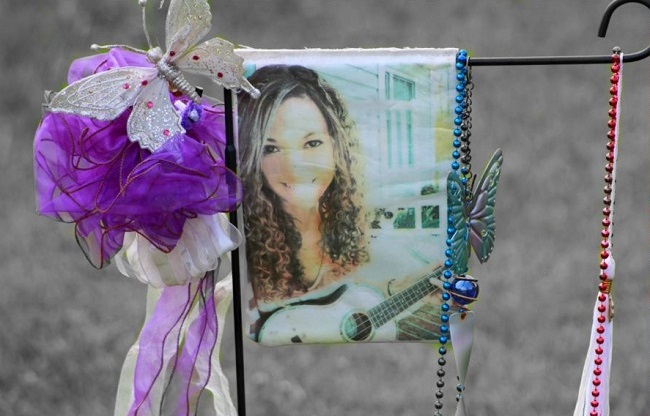
Asia Danielle Foxworth a.k.a. Danielle Westbrook was tragically killed in a car accident in 2011. Her father, Steven Foxworth, was informed of his daughter’s death by a mailed notice asserting that he had no entitlement to her estate. Mr. Foxworth was unlawfully denied any contact with his daughter for 12 years and wasn’t told her name had been changed.

For most of her brief life, the girl Mr. Foxworth had known as Asia Danielle Foxworth was Danielle (“Danni”) Westbrook.

After Mr. Foxworth separated from Asia’s mother in 1998, he was “threatened to stay away from his own child’s daycare that he enrolled her in.” Mr. Foxworth petitioned the court and succeeded in having his parental rights acknowledged “concerning phone/standard physical visitation, and full access to all pertinent info, i.e., school and medical records,” but Asia’s mother, Rusty Dawn Skipper, was granted full custody, and she moved to North Carolina and, according to Mr. Foxworth, declined to observe the court’s order that Asia be brought to Georgia for visitation with her father. She furthermore provided Mr. Foxworth no contact information and in 2000 changed Asia’s surname to Westbrook, that of her then fiancé, without Mr. Foxworth’s consent.

Though he paid child support, never knowing if it reached its intended recipient, the only communication Mr. Foxworth received from Asia’s mother concerning his daughter in 12 years was a legal notice, sent after his daughter’s death, apprising him that he had no claim to her estate.

That’s how the mother of his daughter informed Mr. Foxworth that his daughter was gone.

Mr. Foxworth reports that even seven months after Asia was killed, her maternal grandparents represented her as living when he contacted them, which he had faithfully done for years, even annually singing “Happy Birthday” on their answering machine, hoping the song would be shared with his estranged daughter.

Mr. Foxworth’s is a poignant story of a father’s alienation from his child that includes collusion by family members and the state. A more detailed version can be found on Mr. Foxworth’s tribute to Asia, DaddysHeart.com, under the tab “Asia’s Law.”

“Asia’s Law” is Mr. Foxworth’s proposal to stop parental alienation.

“Asia’s Law” will stand on the principle that no one parent has the right to infringe upon the legal parental rights of another parent.

“Asia’s Law” will promote the enforcement of standard child visitation for noncustodial parents as rigorously as child support is enforced for custodial parents. There will be a governmental arm that works with Child Support Enforcement Services that regards court-ordered visitation as seriously as child support arrearage. In the current construct, the message is sent that the value of money to take care of a child is more important than the value of a child’s having the love, affection, and guidance of his or her other parent.

“Asia’s Law” will also make it illegal for a custodial parent to change the name of a minor without the other natural parent’s consent—in any state.

Additionally, “Asia’s Law” will mandate that a non-custodial parent give blood (except in cases of religious exemption) so that if a child needs blood for any medical reason, it will be there for him or her.

“Asia’s Law” will save lives—emotionally and physically. We need this law passed to protect families.

My daughter, Asia Danielle Foxworth (“Danielle Westbrook”), is no longer here, but if there had been a law like this in place while she was living, she could not have been kept from me—under the radar for 12 years. Further, her “name change”—save legal adoption (which I would not have consented to)—could never have been permitted. Lastly, if my daughter would have survived her fatal car accident and needed blood, she could have had mine, providing it was stored for her. There are also children who have natural ailments; blood donation from a natural parent could save their lives, even if that other parent lived in another state. Too many are suffering. We need “Asia’s Law” passed. I have my story, but there are countless others. Parental Alienation is an age-old phenomenon and stereotypes typecast parents, especially fathers. The bottom line is no child should be kept from a loving parent—illegally and/or out of spite. If through “Asia’s Law” families are reunited, the rights of noncustodial parents respected, and lives saved, my daughter’s transition will not have been in vain.

~Steven Foxworth

Copyright © 2015 RestrainingOrderAbuse.com

*Compare Mr. Foxworth’s story of parental alienation to that of estranged father Neil Shelton: “The ‘Nightmare’ Neil Shelton Has Lived for Three Years and Is Still Living: A Father’s Story of Restraining Order Abuse.” Attention to Steven Foxworth’s story was brought to the author of this blog by the Georgia-based Kayden Jayce Foundation, a nonprofit devoted to remedying parental alienation and legal abuse.