The last post posited that the snarky zinger often aimed at teachers applies at least as aptly to the court: Those who can’t do, judge.
Conclusions in that post were inspired by conversations I had this week with a client, a former criminal defense attorney who began his legal career in the county prosecutor’s office. He impressed upon me that lower-court judges’ legal credentials ranged from inexperience to no education in the law whatever.
He told me that judges often called him to get clarifications of legal niceties.
I’ve been in procedures in both my county’s “justice court” and superior court. In each, I represented myself. If you’ve been the defendant in a restraining order trial (and possibly one or more trials that devolved from allegations on a restraining order petition), see if your experience didn’t correspond with mine.
My impression of the judge’s conduct in the restraining order hearing I was granted was that he grasped at whatever he could to justify the court’s preliminary findings. He didn’t “negotiate” the facts; he chose ones that could support the conclusion he preferred.
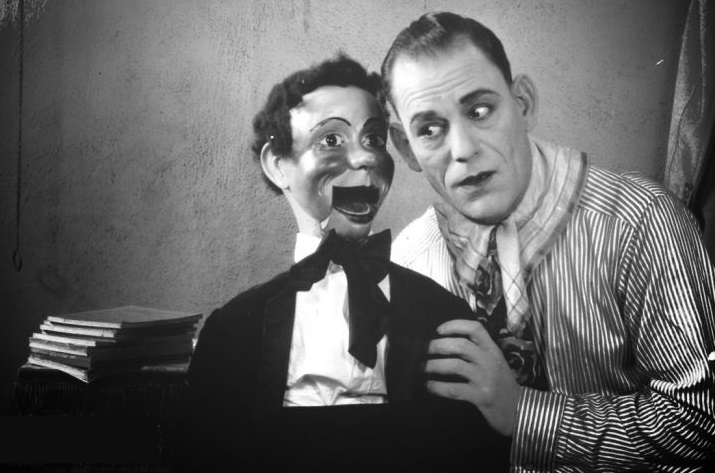
Similarly, in cases before the superior court in 2010 and 2013, in which I was self-represented and my accuser had an attorney speak for her, the judges basically did whatever her attorney told them they should: monkey see, monkey do. In each trial, it was like watching a puppet show. The judges, in instances, even parroted back the attorney’s language in their rulings.
At the time, I just assumed the whole process was fixed (i.e., bent as a papier-mâché flagpole), and I know from hearing many other people’s stories of similar travesties that they left the courtroom feeling the same.
What I realize now, though, is that the reason judges acquiesce to attorneys and seem to echo whatever they say like ventriloquists’ dummies is that they’re glad to be told what to conclude and how to justify that conclusion. The record doesn’t have to withstand much scrutiny—few people actually take such cases to the high courts; its “findings” just have to be persuasively plausible.
Instead of having a healthy skepticism and suspicion of attorneys’ (and plaintiffs’) motives, arguments, and testimony, judges aren’t confident enough in their own knowledge and powers of discernment to challenge them.
As my client, the former attorney, derisively says of judges, “They’re umpires” (spectators). They don’t “find” anything but what’s handed to them.
If bottom-rung judges only ruled on traffic citations and officiated over marriages—which is all some of them possess the proper qualifications to do—this wouldn’t be a big deal. When, however, they indefinitely impact futures (or void them) because their “civil” rulings impute criminal behavior to defendants (possibly based on nothing or on lies), this is playing fast-and-loose with people’s lives.
Copyright © 2015 RestrainingOrderAbuse.com
 TALKING BACK to restraining orders